
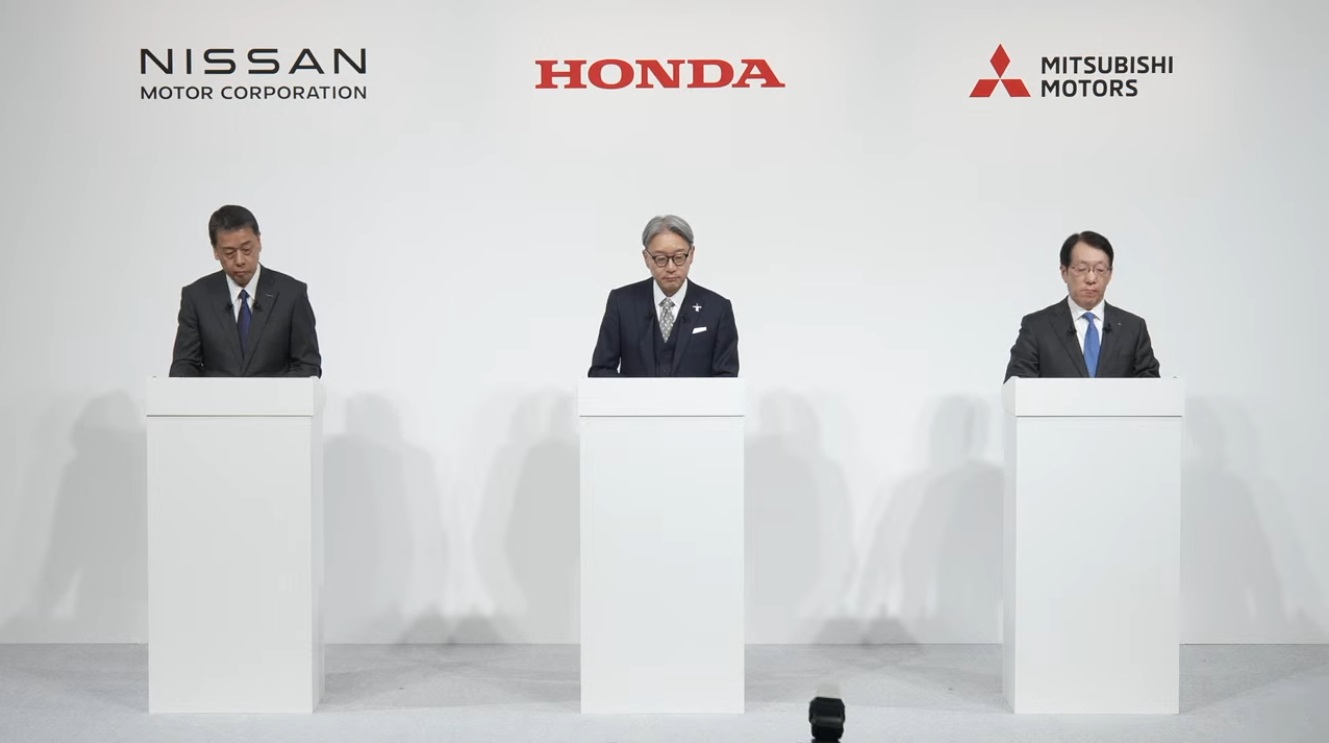
Japanese Auto Giants Unite: Nissan and Honda’s Historic Integration Plan Signals Industry Transformation

The era of independent automakers is drawing to a close. In a move that signals a fundamental reshaping of the automotive landscape, Japanese giants Nissan and Honda have announced plans to explore a business integration through a joint holding company. This unprecedented merger between longtime rivals doesn’t just represent the biggest automotive consolidation in Japanese history—it heralds the dawn of an age where standing alone is no longer viable in the global auto industry.
The End of an Era
The automotive industry’s century-old model of independent manufacturers competing head-to-head is crumbling under the weight of technological revolution. As the costs of developing electric vehicles, software-defined vehicles (SDVs), and autonomous systems spiral into the billions, even the industry’s most storied names are being forced to choose between consolidation or irrelevance. The Nissan-Honda integration appears to be not just a merger, but a blueprint for survival in an industry where going it alone has become too costly and too risky.
From Independence to Alliance
While Nissan and Honda have proudly maintained their independence throughout their histories, even competing fiercely in both domestic and international markets, their proposed integration acknowledges a new reality: the future belongs to the mega-makers. The companies began their courtship cautiously on March 15, with discussions evolving into deeper technological collaboration by August 1. This transformation from proud rivals to partners illustrates how rapidly the automotive landscape is changing.
Building a Manufacturing Titan
The proposed structure envisions a powerhouse that would rival the industry’s largest players. Through a joint holding company set to list on the Tokyo Stock Exchange by August 2026, with Honda taking the governance lead, the combined entity targets sales revenue exceeding 30 trillion yen. This isn’t just a merger—it’s the creation of a new class of automotive manufacturer with the scale and resources to compete in an increasingly tech-dominated industry.
Strategic Imperatives
The integration strategy reveals the new table stakes for automotive success:
- Joint development of next-generation SDV platforms, focusing on intelligence and electrification
- Unified vehicle platforms to achieve economies of scale
- Consolidated R&D capabilities to match tech industry innovation pace
- Streamlined manufacturing and supply chain operations
- Integrated talent pool focused on emerging technologies
The Race Against Time
With a target decision date set for January 2025, both companies recognize the urgency of adaptation. The integration preparatory committee and due diligence process aren’t just about combining two companies—they’re about creating a template for automotive survival in the age of tech disruption.
Industry Implications
This merger is likely to set off a chain reaction across the automotive sector. As the industry’s smaller players watch this consolidation of two major manufacturers, many will be forced to confront their own vulnerability in a market that increasingly favors scale and technological capability. The question is no longer whether to merge, but with whom and how quickly.
Conclusion
The Nissan-Honda integration represents more than just another corporate merger—it marks the beginning of the mega-maker era in automotive manufacturing. As traditional automakers face unprecedented challenges from tech giants, changing consumer preferences, and the electric revolution, this consolidation signals a future where going it alone is no longer an option. The success of this historic integration could trigger a wave of similar mergers globally, as manufacturers race to build the scale and capabilities needed to survive in an industry where being solo increasingly means being left behind.
 Elektronikar
Nissan Civic GT-R meme akhirnya menjadi kenyataan 😂
LikeLike