
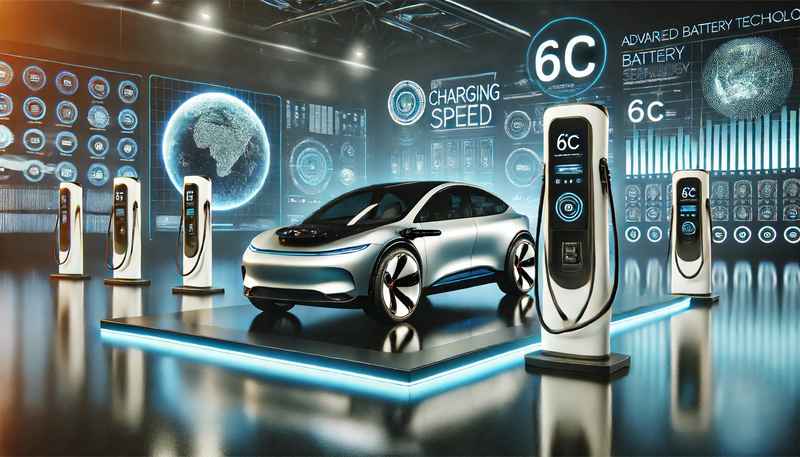
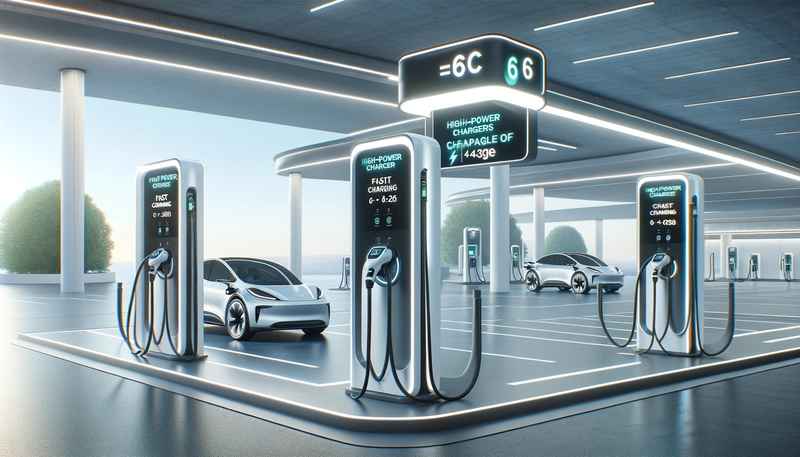
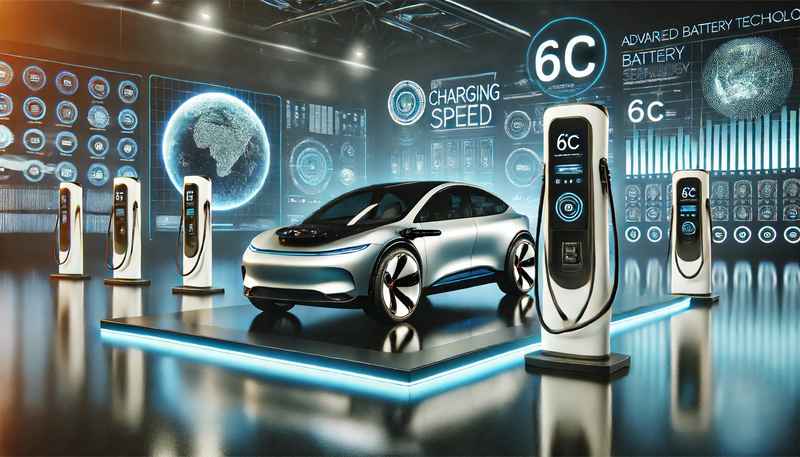
The automotive industry is on the brink of a significant breakthrough with the development of 6C battery technology. This new advancement promises to reduce electric vehicle (EV) charging times to just 10 minutes, making EVs more practical and appealing to a broader audience. Companies like CATL and BYD are leading the charge in this exciting development.
The Game-Changer: 6C Battery Technology
The term “6C” refers to a charging rate that allows a full charge in one-sixth of an hour, or 10 minutes. CATL plans to launch its second-generation Qilin Battery with 6C charging in late 2024, while BYD is also preparing to introduce a 6C version of its Blade Battery. This marks a significant leap from the current 5C technology, which can achieve a full charge in 12 minutes.
Impact on EV Charging Experience
Reducing charging time to 10 minutes can drastically improve the convenience of using EVs, making them comparable to traditional gasoline vehicles in terms of refueling time. Current 5C technology charges a 500-kilometer range in 12 minutes, but 6C technology offers even faster charging, enhancing the user experience. Faster charging means reduced wait times during road trips, less downtime for fleet operations, and a generally more efficient driving experience.
Why Charging Speed Matters to Buyers
Fast charging is crucial for the practical daily use of EVs, especially for users who need quick top-ups. It reduces the refueling disparity with gasoline vehicles, making EVs more attractive. Quick charging capabilities also help alleviate range anxiety, providing peace of mind for long-distance travel.
Addressing Barriers to EV Adoption
Charging time is a top barrier to EV adoption, second only to range concerns. According to the International Energy Agency (IEA), charging speed is critical for potential buyers, especially for long trips. By offering 6C charging technology, manufacturers can address these concerns, making EVs more viable for a larger audience.
Historical Development of Charging Technology
Initial EV charging technologies were slow, often taking several hours to fully charge a vehicle, deterring early adopters. Over the years, technological advancements led to faster solutions like 3C and 4C charging, eventually resulting in the current 5C technology. Key milestones include the development of Tesla’s Supercharger network, the introduction of CHAdeMO and CCS standards, and the latest advancements by companies like CATL and BYD.
Consumer Demand and Market Trends
As EV adoption increases, so does the demand for faster charging solutions. Consumers seek seamless charging experiences that fit into their busy lives. There is a noticeable trend towards the production of long-range EVs, which require efficient and fast charging infrastructure. Faster charging times are a decisive factor for consumers when choosing between different EV models.
Technical Advancements Enabling 6C Charging
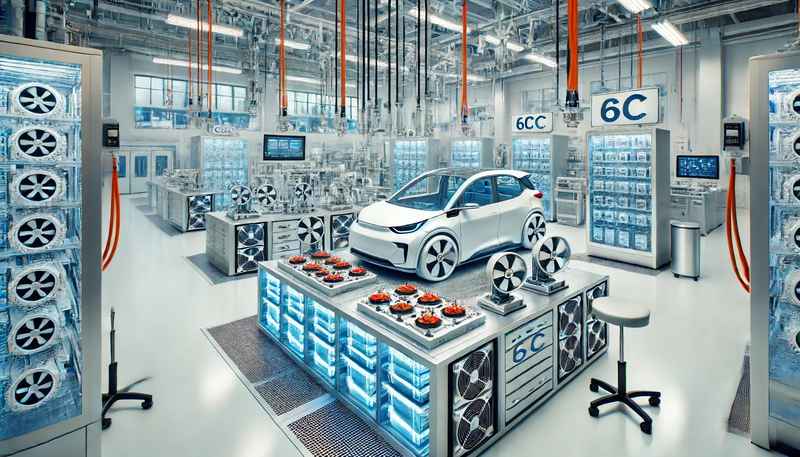
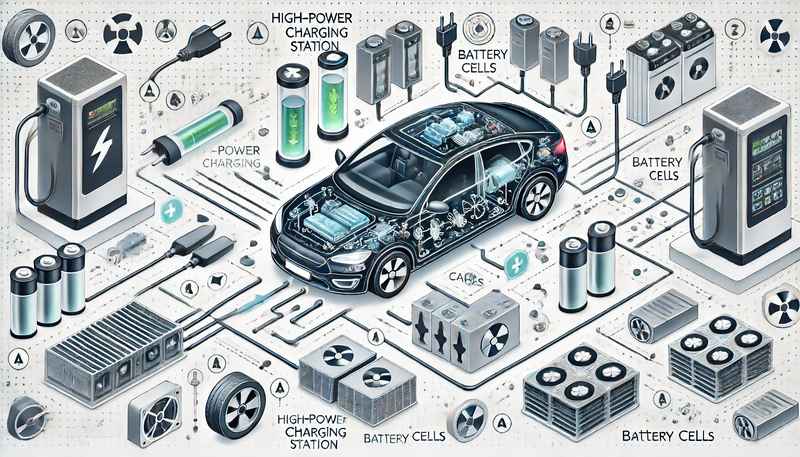
Advances in battery cell chemistry, including the development of new materials and electrolytes, are crucial for achieving higher charging rates. Enhanced cooling systems, such as liquid cooling, manage heat efficiently. Improved battery designs, including better electrode structures and optimized battery pack configurations, support higher charging rates without compromising safety.
Potential Downsides of 6C Charging
Rapid charging generates significant heat, which can be challenging to manage and increases battery degradation risk. High-power charging stations (360 kW or more) are required but not widely available. The technology and materials for 6C charging are more expensive, increasing overall EV costs. Safety concerns include the risk of overheating and thermal runaway, requiring enhanced safety protocols.
Industry Standards and Regulations
Industry standards like CHAdeMO, CCS, and Tesla Superchargers ensure compatibility and safety across different EV models and charging stations. Governments promote fast charging through incentives, subsidies, and regulations. Strict safety standards and compliance measures are necessary to mitigate rapid charging risks.
Practical Considerations and Challenges
The current infrastructure is not widely equipped for 6C charging, requiring high-power stations. Upgrading the electrical grid to support widespread use of high-power charging stations involves significant costs and logistical challenges. Ensuring that frequent fast charging does not excessively degrade battery life is crucial.
Real-World Examples and Case Studies
Tesla Supercharger Network: Tesla’s Supercharger network offers rapid charging, gaining up to 200 miles of range in 15 minutes. Tesla’s V3 Superchargers deliver up to 250 kW, setting a benchmark in the industry and pushing other automakers and charging providers to enhance their offerings.
Porsche Taycan and Ionity Network: The Porsche Taycan, equipped with an 800-volt system architecture, can charge from 5% to 80% in just 22.5 minutes using Ionity’s 350 kW chargers. This collaboration highlights the importance of robust charging infrastructure.
Electrify America: Electrify America operates one of the largest public fast charging networks in the U.S., offering charging speeds of up to 350 kW. This network expansion supports the adoption of diverse EV models and enhances the overall EV ownership experience.
Lucid Air: The Lucid Air can add up to 300 miles of range in just 20 minutes using a 350 kW charger. Lucid’s innovations demonstrate the potential for combining high-performance battery technology with existing high-power charging infrastructure.
Fastned: Fastned provides high-speed charging up to 300 kW at its stations across Europe. The network’s user-friendly interface and reliable performance make it convenient for drivers.
Conclusion
The development of 6C charging technology by CATL and BYD promises to revolutionize EV charging. While there are challenges, such as infrastructure and safety concerns, the benefits of rapid charging are clear. As the industry continues to innovate, EV adoption is expected to accelerate, making electric vehicles more practical and appealing to consumers worldwide.
 Elektronikar