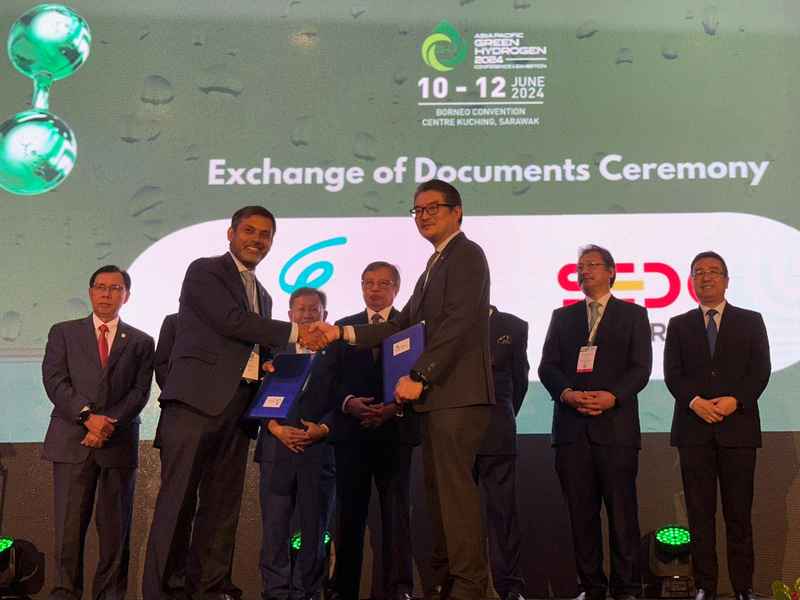

The recent launch of the Sarawak H2 Hub marks a transformative milestone in Malaysia’s journey towards carbon neutrality. This ambitious project, a joint venture between SEDC Energy Sdn Bhd (SEDCE) and Gentari Sdn Bhd (Gentari), is set to become a global-scale hydrogen production facility. As Malaysia strives to achieve its carbon neutrality goal by 2050, the Sarawak H2 Hub emerges as a pivotal player in revolutionizing the nation’s energy landscape and spearheading its hydrogen economy.
Malaysia’s commitment to carbon neutrality is underscored by strategic initiatives like the Sarawak H2 Hub. This facility promotes the production and utilization of green hydrogen, a crucial element in reducing carbon emissions across various sectors. By aligning with Malaysia’s Hydrogen Economy and Technology Roadmap, the Sarawak H2 Hub exemplifies a concrete step towards realizing a sustainable and low-carbon future.
Green hydrogen production at the Sarawak H2 Hub offers substantial environmental benefits. In the industrial sector, green hydrogen can replace fossil fuels, significantly reducing the carbon footprint of industries such as steel and chemical production. For instance, producing one ton of steel with hydrogen can save up to two tons of CO2 emissions compared to traditional methods.
Similarly, hydrogen fuel cell vehicles, which emit zero emissions, offer a cleaner alternative to conventional fossil fuel-powered vehicles. With an annual production target of 100,000 tons of green hydrogen, the hub could potentially avoid approximately one million tons of CO2 emissions per year, making a significant contribution to Malaysia’s carbon neutrality targets.
The Sarawak H2 Hub also plays a crucial role in enhancing renewable energy utilization. By relying on renewable energy sources for hydrogen production, the hub will stimulate investments in solar, wind, and other renewable projects in Sarawak and beyond.
Additionally, hydrogen production can act as a flexible load, balancing supply and demand on the electricity grid and supporting the integration of intermittent renewable energy sources.
Economically, the Sarawak H2 Hub is poised to drive substantial growth and innovation. The development and operation of the hub will create numerous high-value jobs in engineering, manufacturing, and operations, boosting the local economy.
Investing in hydrogen technology positions Malaysia as a leader in the clean energy sector, attracting international partnerships and further investments.
The market opportunities for the Sarawak H2 Hub are immense. The global green hydrogen market was valued at approximately USD 1 billion in 2021 and is expected to grow at a compound annual growth rate of over 55% from 2022 to 2030, reaching around USD 89 billion by 2030.
If Sarawak captures even a small share of this market, it could represent an annual market opportunity of nearly USD 890 million by 2030. In the chemical production sector, the global ammonia market size was valued at USD 76.64 billion in 2020 and is expected to reach USD 112.86 billion by 2027.
The global methanol market, valued at USD 31.8 billion in 2021, is projected to reach USD 54.6 billion by 2027. Capturing one to two percent of these markets could result in revenues of approximately USD 1-2 billion annually from ammonia and methanol production by 2027.
The transportation sector also presents significant opportunities. The global market for hydrogen fuel cell vehicles, valued at approximately USD 1.2 billion in 2020, is projected to reach USD 46.89 billion by 2030.
Similarly, the global hydrogen fueling station market, valued at USD 0.4 billion in 2021, is expected to reach USD 8.64 billion by 2030. Developing a robust hydrogen infrastructure could position Sarawak to capture a portion of these expanding markets, generating substantial infrastructure investments and operational revenues.
In industrial applications, hydrogen-based steelmaking holds significant potential to reduce carbon emissions. The global steel market, valued at approximately USD 2.5 trillion in 2021, could benefit from Sarawak’s green hydrogen supply, capturing market opportunities worth tens to hundreds of millions annually.
Furthermore, the global hydrogen energy storage market, valued at USD 13.73 billion in 2020, is expected to reach USD 26.4 billion by 2026. Participating in this market could yield substantial revenue from hydrogen storage solutions, contributing significantly to Sarawak’s economy.
The Sarawak H2 Hub also drives forward-thinking policies and regulations. As a practical application of Malaysia’s Hydrogen Economy and Technology Roadmap, the project encourages robust policy support and investment.
Success in this initiative could lead to stricter environmental regulations and incentives for industries to adopt green hydrogen, accelerating the transition to a low-carbon economy.
On the international stage, the Sarawak H2 Hub enhances Malaysia’s contribution to global sustainability commitments. Efforts to reduce carbon emissions through green hydrogen support Malaysia’s commitments under the Paris Agreement to limit global warming. By becoming a regional hub for green hydrogen, Malaysia sets an example for neighboring countries to adopt similar clean energy technologies.
The launch of the Sarawak H2 Hub is a landmark event that propels Sarawak into the forefront of the green hydrogen sector and significantly aids Malaysia in reaching its carbon neutrality and sustainability goals.
This initiative, through its innovative approach and strategic partnerships, is set to deliver profound economic, environmental, and technological benefits, ensuring a sustainable and prosperous future for Malaysia. As the Sarawak H2 Hub begins its journey, it stands as a testament to Malaysia’s commitment to a cleaner, greener, and more resilient energy landscape.
 Elektronikar