

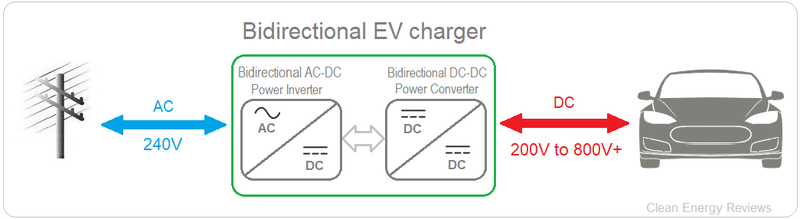
Electric vehicles (EVs) are rapidly becoming a mainstream transportation option. But their impact could extend far beyond the road, potentially reshaping how we manage and utilize energy. Enter bi-directional charging, a technology that allows EVs to not only be charged by the grid but also feed power back into it. This two-way flow of electricity holds immense potential for the future of EVs, power grids, and even our wallets. So, buckle up as we explore the world of bi-directional charging, delve into its benefits and challenges, and ponder the question: will these chargers become a mandatory part of every EV owner’s future?
The Power of Two-Way Streets: Understanding Bidirectional Charging
Imagine a world where your EV isn’t just a passive recipient of electricity from the grid. Bidirectional charging flips the script, transforming your EV into a giant mobile battery. These chargers enable a two-way flow of power:
- From Grid to EV: This is the familiar function – the charger converts AC (Alternating Current) electricity from the grid to DC (Direct Current) electricity, the kind that juices up your EV’s battery.
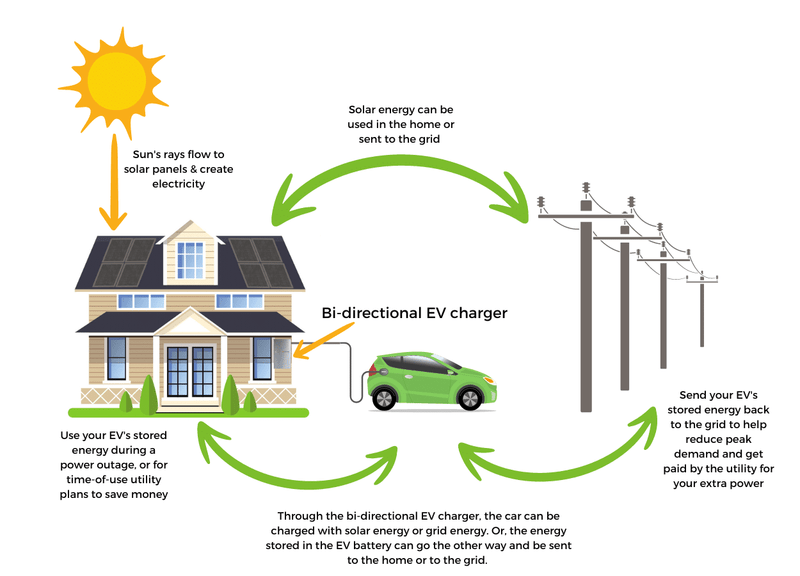
- From EV to Grid (V2G) or Home (V2H): Here’s where things get exciting. When plugged into a compatible bidirectional charger, your EV can act as a power source, sending excess energy back to the grid (Vehicle-to-Grid or V2G) or to your home (Vehicle-to-Home or V2H).
The Allure of Bi-Directional Charging: A Symphony of Benefits

The potential benefits of bidirectional charging are numerous, making it a technology with the power to revolutionize various aspects of our energy landscape:
- Grid Guardians: As the number of EVs on the road surges, managing peak demand on the grid becomes a growing challenge. Bi-directional charging offers a solution. Millions of EVs plugged in, with the ability to send power back, could act as a vast distributed energy storage system. During periods of high demand, EVs could discharge stored energy, alleviating stress on the grid and potentially reducing reliance on expensive “peaker plants” that are only fired up during peak hours.
- Renewable Renegades: Solar and wind energy are fantastic, but their production is often variable. Think sunshine and strong winds one day, followed by cloudy skies and calm air the next. Bidirectional charging can bridge this gap. EVs could store excess renewable energy generated during peak production times and then use that power later when renewable sources aren’t readily available. This would significantly improve the integration of renewable energy sources into the grid.
- Energy Efficiency Experts: Imagine this: you charge your EV during off-peak hours when electricity rates are lower. Then, when peak hours hit and electricity prices spike, you can utilize the stored energy in your EV to power your home. Bidirectional charging empowers you to become a more strategic energy consumer, potentially saving money on your electricity bills.
- Power on Demand: Power outages can be disruptive and inconvenient. Bidirectional charging offers a solution. Your EV, equipped with a bidirectional charger, can serve as a backup power source for your home during an outage. This ensures that essential appliances, like refrigerators and medical equipment, can continue to operate.
- Vehicle-to-Grid (V2G) Services: The concept of V2G services takes things a step further. With bidirectional charging, EV owners could potentially earn money by selling excess electricity back to the grid or participating in demand-response programs. Utilities might offer incentives to EV owners who are willing to discharge their EVs during peak demand periods, helping to stabilize the grid.
The Roadblocks on the Highway: Challenges and Considerations
While the potential benefits of bi-directional charging are undeniable, there are challenges to consider before it becomes the norm for every EV owner:
- Cost: Currently, bidirectional chargers are significantly more expensive than traditional AC chargers. The additional technology required for two-way power flow adds a significant price premium. As the technology matures and production scales up, the cost is expected to decrease, but it may still be a deterrent for some consumers in the near future.
- Infrastructure: Widespread adoption of bidirectional charging would necessitate upgrades to the current electricity grid. The grid needs to be able to handle the two-way flow of power from millions of EVs. This would be a complex and potentially expensive undertaking that could take time and significant investment.
- Consumer Adoption: Not all EV owners may be interested in the additional complexity or potential cost savings of bidirectional charging. Some drivers might simply want a basic EV for commuting, and the added features of bi-directional charging might not be a priority.

 Elektronikar