
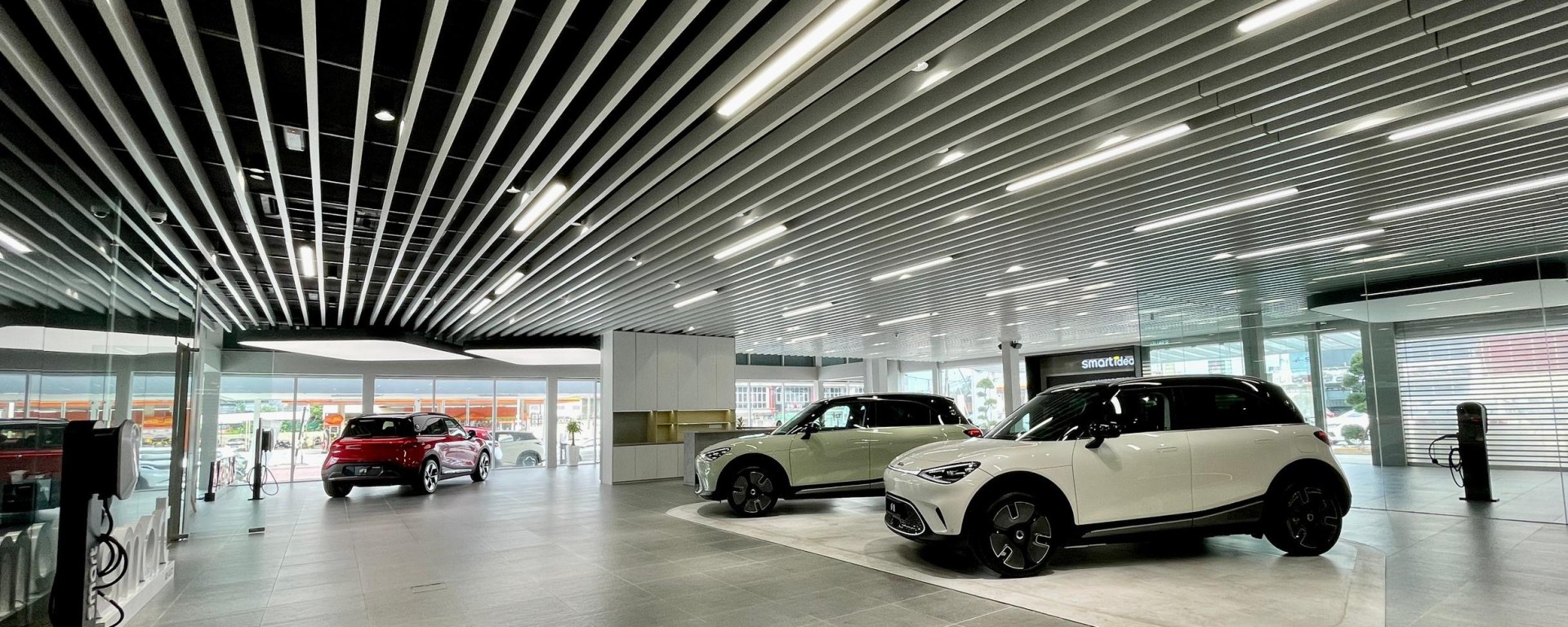
In the bustling Malaysian electric vehicle (EV) market, where the hum of innovation meets the buzz of new arrivals, Smart Automobile is carving its own niche with the stylish and technologically advanced #1 series.
As a newcomer in the premium EV space, Smart faces the formidable presence of Tesla, which has recently shaken up the market with its sleek Model 3.
The #1 series is an urban crossover that stands out with its Euro-inspired design, a collaborative effort between Smart’s designers and the prestigious Mercedes Benz styling department.
Unlike Tesla’s masculine and minimalist approach, the #1 embraces a friendlier design, featuring gentle curves and a neutral, welcoming face. The interior reflects a modern living space, combining cleanliness with touches of flourish through interesting textures and colors.
Tesla is using its significant cost and efficiency advantage to assert dominance in all markets, and its pricing reflects that desire. This has put many companies, including Smart, on the back foot, but they have decided to take the bull by its horns.
Smart’s chances hinge on several key factors, with the most significant being their friendly design, which many may find more approachable than the typical severe minimalist aesthetics commonly associated with electric vehicles.
The partnership with Geely, now a major player in the China automotive market, certainly offers cost and efficiency advantages, as well as a good connection with the hub of the EV supply chain that is China. This is evident from the quality of the materials used and the freshness in design that comes with a new company that does not have too many traditions to hang on to.
In fact, Smart’s presentation to the market has been deliberately light on their history as a European city car manufacturer, focusing on moving forward, which is probably a good move.
Smart’s timing for its entry into Malaysia can be seen as fortunate or unfortunate, depending on how you want to look at it. While it can be intimidating to launch your product just after Tesla has made ground-shaking announcements with its pricing, bringing premium EVs below RM200K, the launch timing can also be seen as fortunate because the price bomb has suddenly created tremendous interest for EVs.
The conversation is fast tilting towards electric vehicles, more specifically premium EVs, and Smart has entered the market just as the wave is forming. They need to figure out how to ride this wave because it could be a big one, and they cannot afford to fall off the board.
To put the Tesla impact into perspective, most industry observers expected EV sales to hit 10,000 units in Malaysia this year. But since Tesla announced their delivery in early December, that projection has ballooned to 14,000 units. It’s not all Tesla, but it is probably likely that the Tesla buzz has created additional interest, and other brands like Smart are probably riding it as well.
Apart from pricing challenges from Tesla, it is well understood that the Fremont Behemoth brings with it an army of superchargers that guard their market very well. Tesla has an aggressive plan for a network of superchargers and destination chargers designed to make Tesla ownership as painless and economical as possible due to their preferential charging rates.
Instead of investing in its own network of chargers, Smart has decided to partner up with the local 800-pound gorilla, Gentari, and their partners.
Gentari, an offshoot of the Malaysian national oil company Petronas, is playing a big role in the local charging infrastructure market where they have brought together two of their biggest competitors into collaboration. The result is a charger network that has over 600 charging points in Malaysia, making it by far the biggest charging network in the country.
Owners of Smart can use their Hello Smart mobile application to access the network and even use the navigation system to plan their journey and get advice on where and when to charge.
The app has the capability to monitor traffic conditions along the route and make appropriate suggestions on charging. This is an important feature because at this relatively early stage of the EV adoption curve, range anxiety is still a critical concern as the infrastructure is being rolled out together with the market.
Smart’s #1 is offered in three variants in Malaysia – Pro, Premium, and Brabus. They are built on Geely group’s Sustainable Experience Architecture (SEA) and are priced between RM189K and RM249K to take on Tesla head-on.
The entry-level Pro variant, starting at RM189K, boasts a 49kWh battery and a rear-wheel-drive single motor delivering 200kW. The Premium and Brabus variants, priced at RM219K and RM249K respectively, feature a larger 66kWh battery. While the Premium maintains the rear-wheel-drive setup, the Brabus, with its dual-motor all-wheel-drive configuration, achieves an impressive combined power output of 315kW.
We think that Smart has an interesting product to offer to Malaysian motorists, but their marketing department will have to work overtime to get people in the cars and experience it to shift their minds from the dominant Tesla perspective.
Luckily, people are people and not everyone likes cola; some of us like something a little less obvious, and that is a chance to create a community, which is all the rage in the EV community.
 Elektronikar