
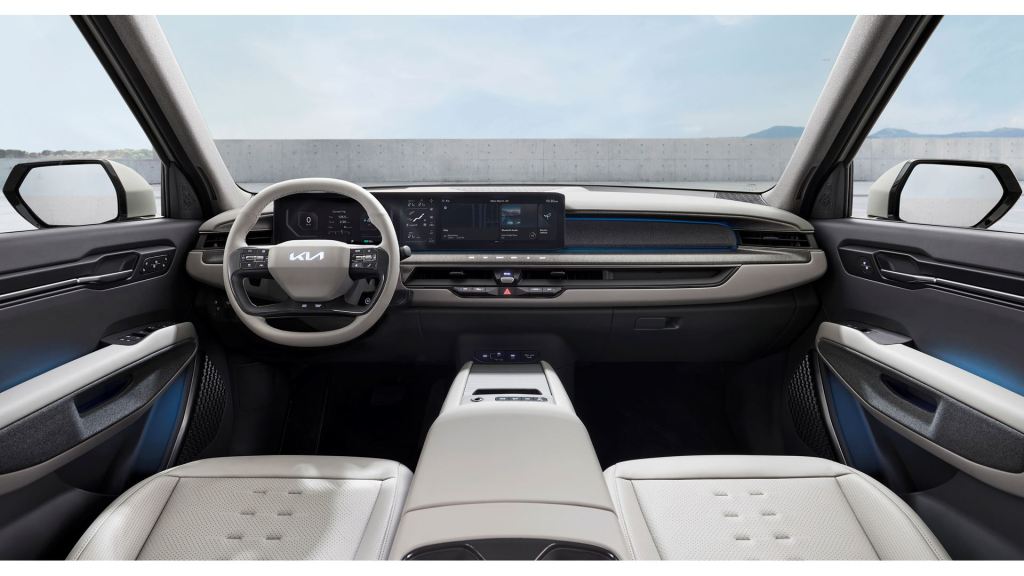
Kia has announced its “10 must-have sustainability items,” which they say define a new baseline for the use of sustainable materials in its future model lines. With this move, Kia aims to achieve carbon neutrality across its operations by 2045.
The EV9 electric flagship will be the first to receive these new materials and they hope it will significantly reduce its environmental impact.
Here are the 10 sustainability items that Kias says will make the EV9 an eco-conscious automotive design.
- Bioplastic: Kia employs bioplastics derived from renewable biomass sources like vegetable oils, corn extract, sawdust, and sugar cane. This versatile material is not only environmentally friendly but also offers diversified sourcing and reduced exposure to harmful chemicals. Bioplastic is used throughout the EV9’s interior, including the dashboard, console, pillars, and garnishes.
- Post-consumer material (PCM) plastic: Kia leverages PCM plastic, which is made from recycled materials instead of new pellets. This innovative process significantly reduces plastic waste and conserves non-renewable resources. The EV9 incorporates PCM plastic in its door garnishes, contributing to waste reduction and landfill regeneration.
- Bio Polyurethane (PU): Kia’s commitment to phase out leather has led to the adoption of Bio PU, a plant-based alternative that reduces carbon emissions. Bio PU provides a comfortable seating experience while maintaining durability. The new Kia EV9 features Bio PU in its seats and interior coverings, offering sustainable luxury.
- Recycled PET fabric: Polyethylene terephthalate (PET) is one of the most easily recycled plastics worldwide. Kia takes it a step further by utilizing recycled PET yarn to create durable and sustainable fabrics for the EV9’s seats, headliner, sun visor, garnish, and headrests. Each EV9 incorporates at least 70 recycled bottles, showcasing Kia’s commitment to waste reduction.
- Recycled PET carpet: In addition to the cabin’s other areas, Kia uses 100% recycled PET to create standard carpets. The company goes even further by incorporating recycled fishing nets into the carpet material. This innovative approach addresses the issue of discarded fishing nets that harm marine life. By recycling these nets, Kia mitigates their impact on ocean ecosystems.
- Bio PU foam: Kia employs Bio PU foam, a versatile material known for its durability and cushioning properties. Made with natural oils, Bio PU foam is an ideal choice for comfortable headrests, providing resilience while minimizing environmental impact.
- Bio paint: Kia’s bio paint, derived from rapeseed oil, offers a sustainable alternative to crude oil-based paints. By reducing chemical waste during the manufacturing process, bio paint minimizes environmental impact without compromising on quality. The EV9 features bio paint on its door switch panels, showcasing Kia’s dedication to eco-friendly solutions.
- BTX-free paint: Kia proactively addresses the environmental effects associated with the use of harmful chemicals like benzene, toluene, and xylene (BTX). By adopting BTX-free paints, Kia maintains high-quality protection and finishes while reducing the use of polluting chemicals. The EV9’s interior is adorned with BTX-free paints, with the exception of the door window switch panel, which features bio paint.
- Recycled PET yarn: Kia utilizes 100% recycled PET bottles to create yarn for various cabin applications. The EV9 showcases more than 70 recycled PET bottles in its seat stitching, enhancing sustainability while maintaining quality craftsmanship.
- Recycled PET felt: The EV9’s luggage board features felt made from recycled PET bottles. This soft and durable material not only contributes to sustainability but also offers good acoustic absorption, enhancing the overall driving experience.
Kia’s Design Sustainability Strategy, exemplified by the EV9, signifies a paradigm shift in the automotive industry. By setting a new benchmark for sustainable materials, Kia paves the way for a greener and more environmentally responsible future. The company’s commitment to achieving carbon neutrality by 2045 is evident in its dedication to reducing waste, investing in sustainable technologies, and pushing the boundaries of eco-friendly automotive design.
With the EV9, Kia proves that sustainable mobility doesn’t mean compromising on style, comfort, or performance. This flagship electric vehicle represents a significant milestone in Kia’s journey towards a more sustainable future, encouraging other automakers to follow suit and prioritize eco-conscious practices. As the automotive industry embraces sustainable solutions, Kia stands at the forefront, driving the transition towards a greener and cleaner world.
 Elektronikar