
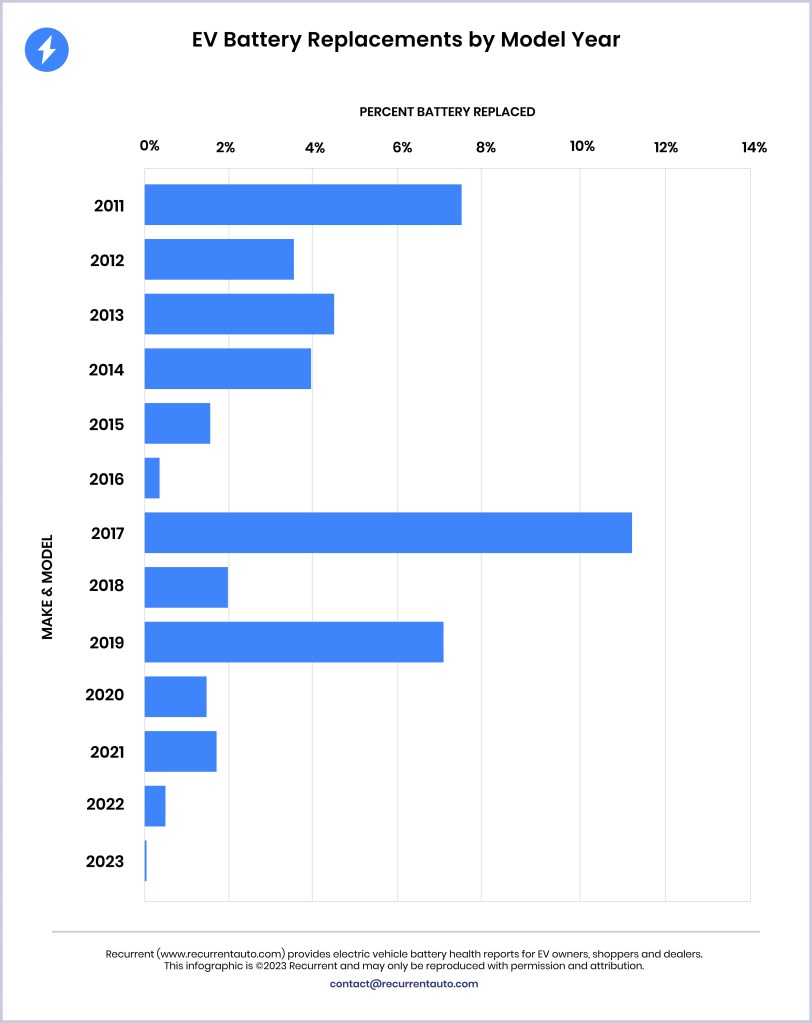

Electric cars are gaining in popularity, but battery life remains a significant concern for potential buyers. Recurrent, a battery analytics company, has examined battery performance in electric vehicles and found that battery replacements are rare, with only 1.5% of the 15,000 electric cars in their community requiring a new battery.
Most battery replacements occur under warranty, with new Rivians, for example, having coverage for 175,000 miles or 10 years. The federal minimum warranty is 8 years or 100,000 miles.
Although lithium-ion batteries used in electric cars start to degrade as soon as they are made, EV batteries are built to ensure their lifetime exceeds their warranty period. Car makers say an electric vehicle should last 15 to 20 years, but little is known about how EV batteries degrade over their lifetime, since most electric vehicles have been on the road for less than six years, with almost 30% sold in 2022.
EV batteries are complex and sophisticated systems, and it is challenging to determine an exact answer to what their lifetime is. Batteries are complicated systems, and observing them directly is not possible; we have to rely on a computer interface to give us information about their state of health, state of charge, and more. However, studies on older models of Nissan LEAF and Tesla Model S, both of which have been on the road for almost a decade, suggest that EV batteries have a lot of life in them.
Although there have been two major battery recalls in recent years, both related to similar battery pack flaws in the Chevrolet Bolt EV and EUV and the Hyundai Kona Electric, most battery replacements in the Recurrent community remain rare. Therefore, it looks like EV batteries have a longer lifespan than previously thought.
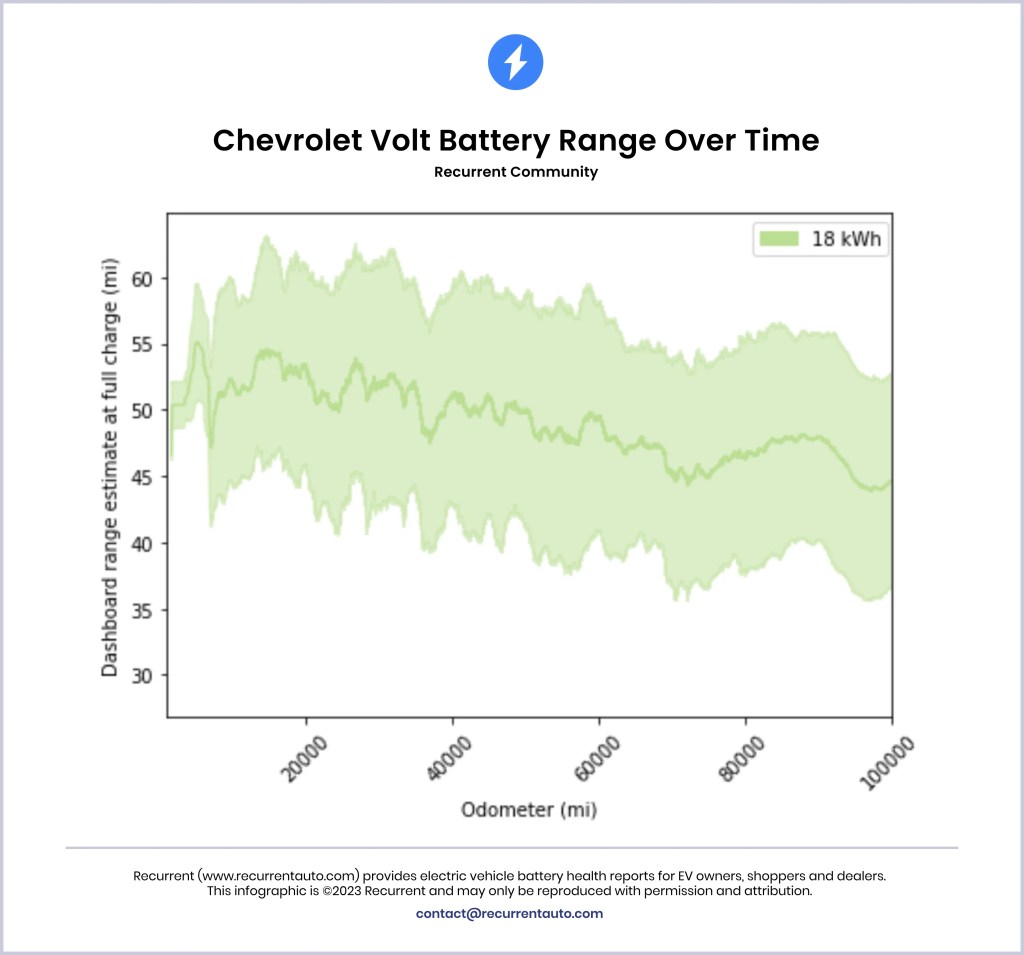
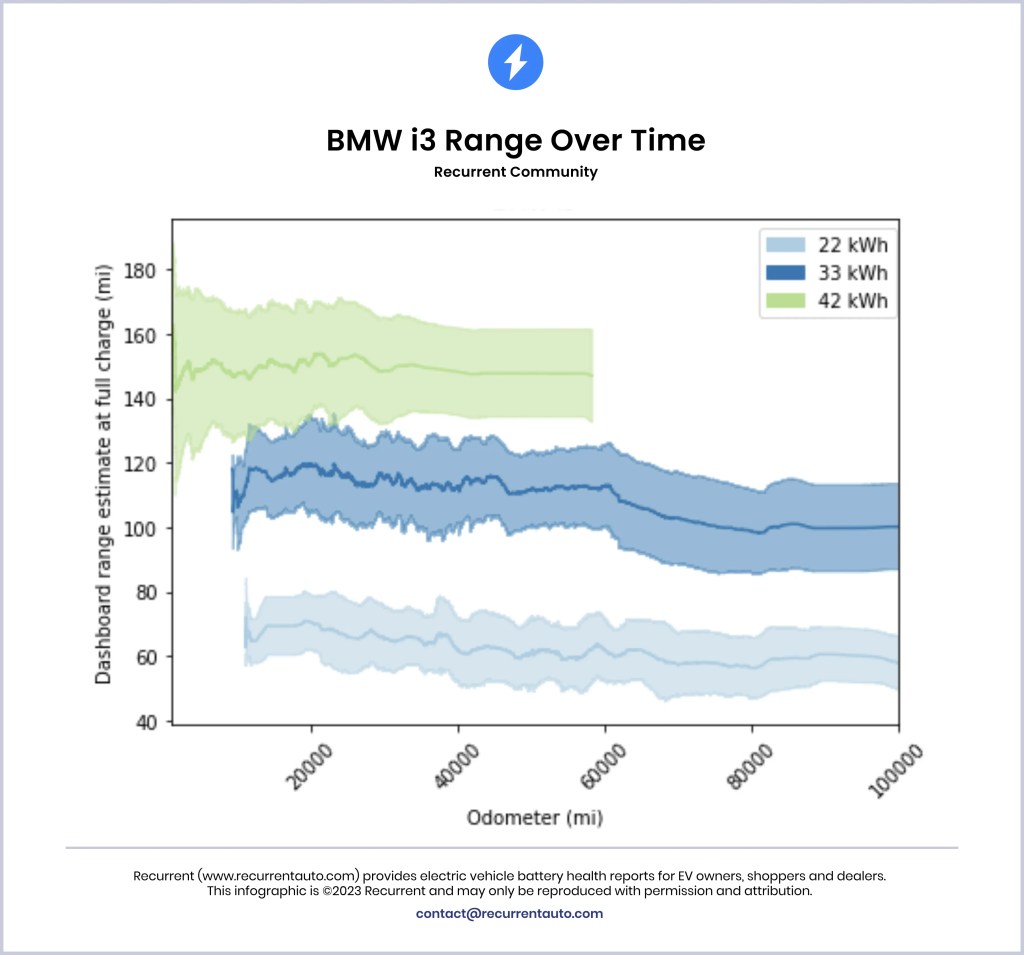
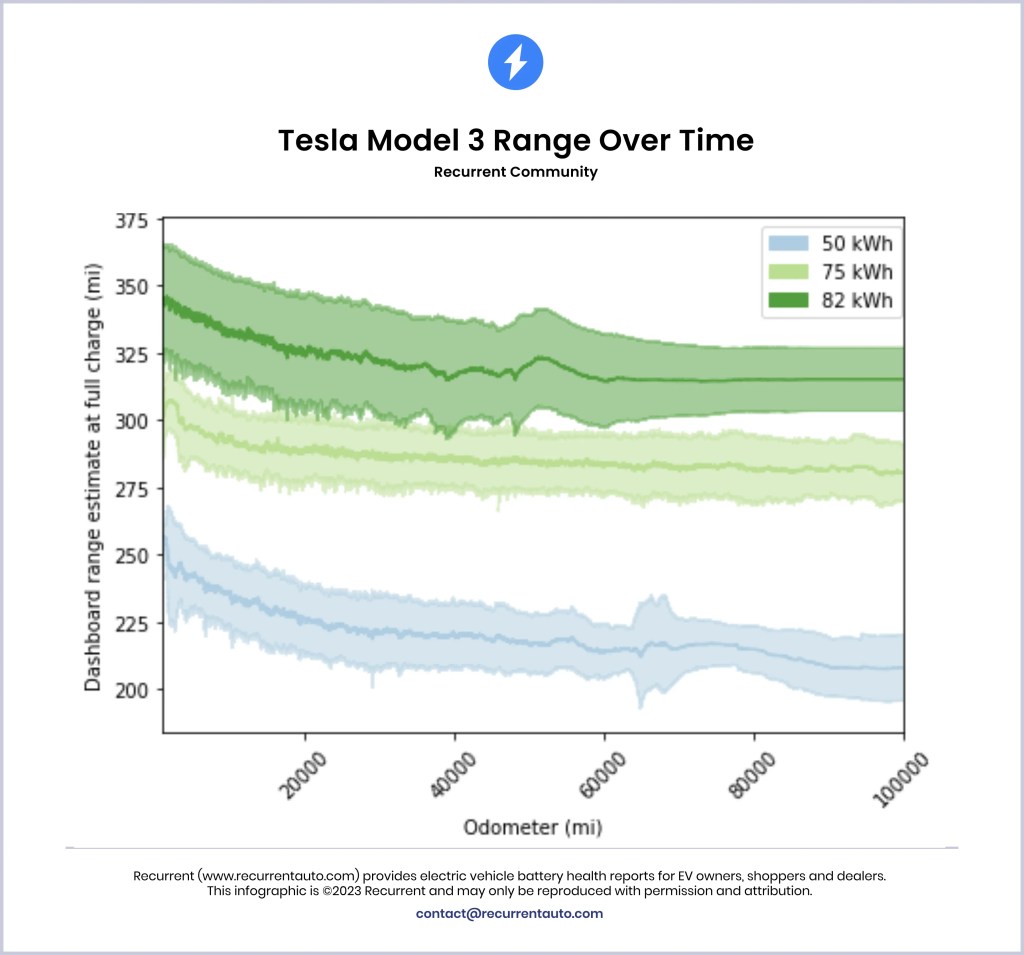
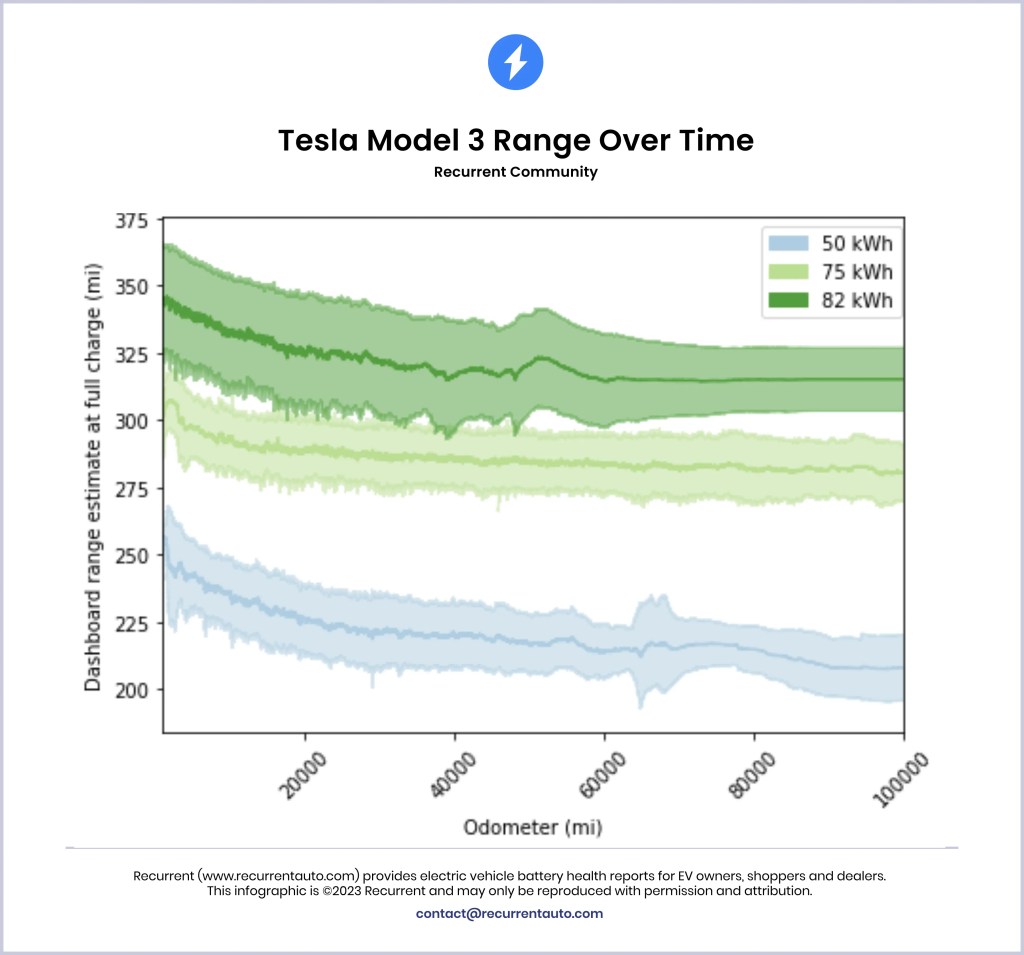
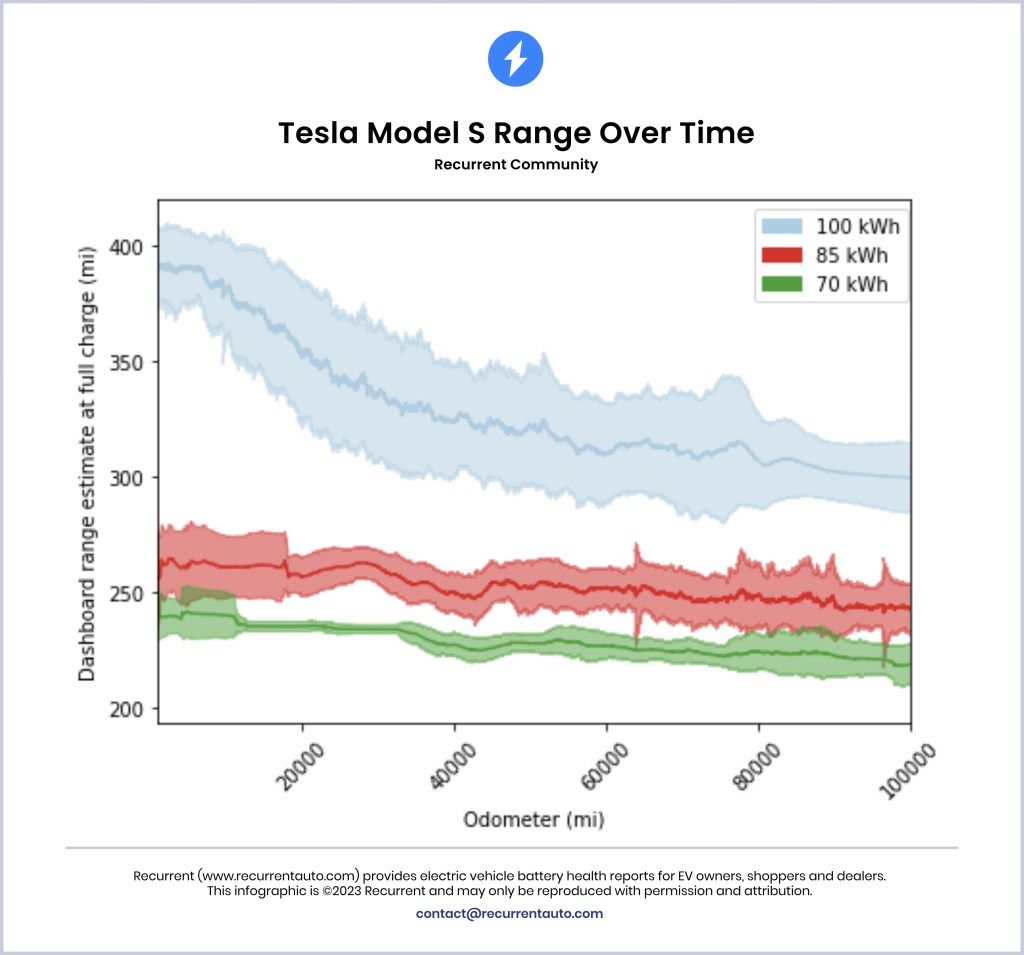
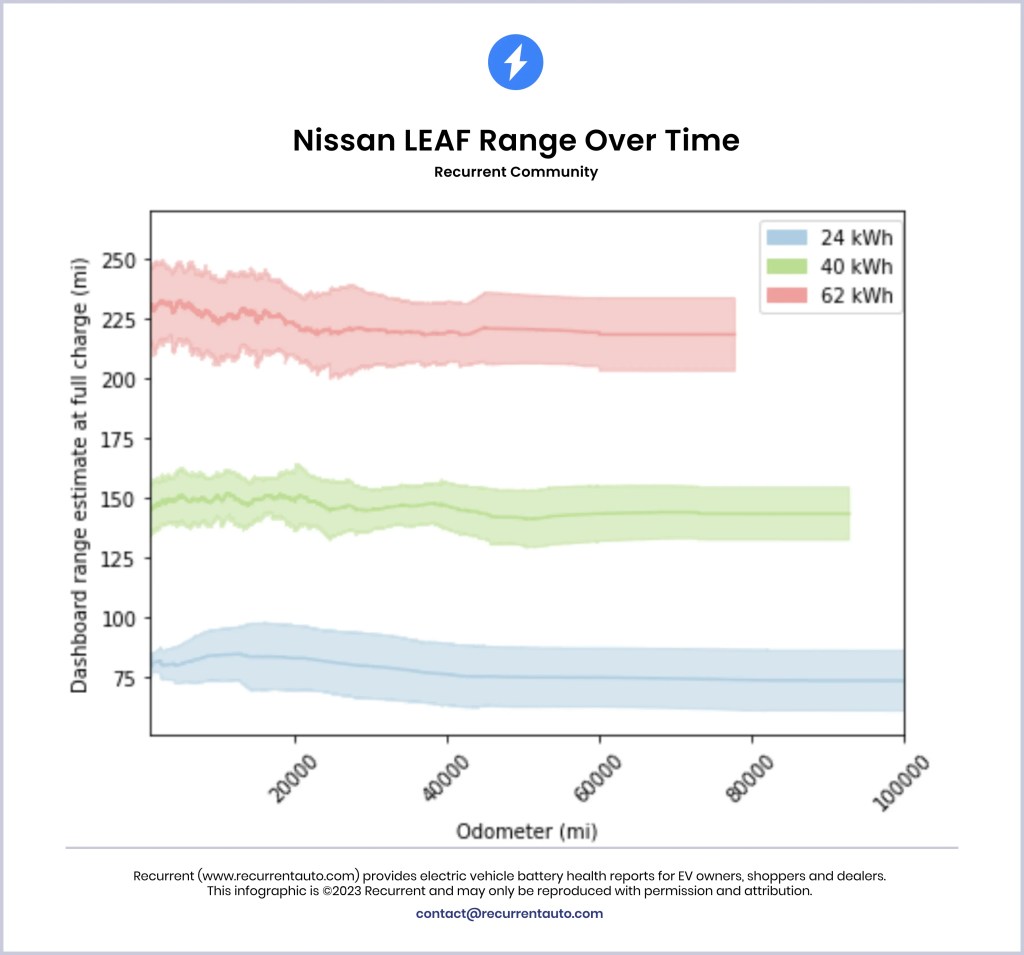
The charts show how the projected range of different electric vehicles changes over time based on real-world observations. It’s important to note that the data is not perfectly representative of all EVs on the road, as there are limitations in data connectivity for some makes and model years.
Despite these limitations, the data shows that electric car batteries tend to degrade at a slower rate than many people might expect. For example, the chart for the Tesla Model S shows that the average range dropped by only about 6% after 50,000 miles, and by around 10% after 100,000 miles. The Nissan LEAF chart shows a slightly faster degradation rate, with an average range drop of around 8% after 50,000 miles.
It’s worth noting that the degradation rate of an EV battery can vary depending on a variety of factors, such as how often the battery is charged and discharged, the climate it’s used in, and more. However, these charts give us a good idea of how electric car batteries tend to hold up over time, and they suggest that most EV owners should be able to use their cars for many years without needing to replace the battery.
Of course, there will always be exceptions, and some electric car batteries may degrade more quickly than others. However, the fact that battery replacements are relatively rare in the Recurrent community suggests that most EV owners can expect their batteries to last for many years.
In conclusion, while it’s difficult to predict exactly how long an electric car battery will last, studies like the one conducted by Recurrent give us a good idea of how electric car batteries tend to hold up over time. Most electric car batteries appear to degrade at a slower rate than many people might expect, and battery replacements are relatively rare outside of major recalls. So if you’re considering buying a used electric car, don’t be too worried about the battery – as long as the car has been well-maintained, it should be able to serve you well for many years to come.

Below is a short analysis of the battery performance of some first generation electric cars;
Nissan LEAF is one of the oldest electric cars still on the road, and it had some issues with its original battery chemistry, which caused the battery to lose charge quickly in hot environments. However, Nissan has since improved the battery technology, and their batteries are generally lasting a long time. In fact, the managing director of Renault-Nissan Energy Services estimated that the batteries may last up to 22 years.
The Tesla Model S is another early electric car, and it has seen a relatively high number of battery replacements compared to later model Teslas. However, the battery degradation curve for the 100 kWh Model S matches the idealized battery degradation curve, while smaller battery packs may not perform as well.
The Tesla Model 3 has been on the road since 2018 and also experiences some battery degradation in the first 20,000 miles before leveling off. However, changes in Tesla software and computer simulations can cause some fluctuations in the data.
The BMW i3 has held up fairly well despite its smaller battery pack and lower range. Older models have hit 100,000 miles with around 80% of original capacity remaining.

The Chevy Volt is a plug-in hybrid vehicle, so it tends to experience less battery degradation compared to fully electric vehicles. However, it still provides a good sample of high mileage cars.
Finally, the Hyundai Ioniq 5 and Ford Mustang Mach-E are newer electric car models, and their range changes over time will be closely monitored, particularly in relation to fast charging.
 Elektronikar