
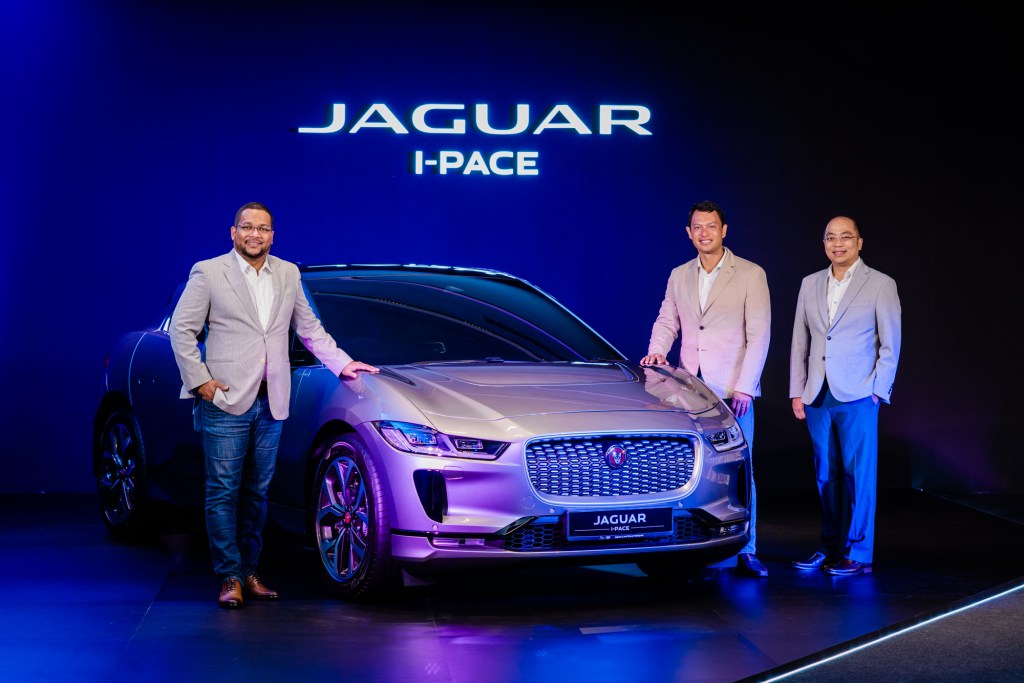
Jaguar Land Rover Malaysia has launched its premium all-electric performance SUV, the Jaguar I-Pace, in the Malaysian EV market.
The I-Pace was first unveiled as a concept car in 2016 at the Los Angeles Auto Show before going into production and entering the US and European markets in 2018
It was the first and remains the only fully electric vehicle mass produced by Jaguar and marked the brand’s entry into the EV market. It features a 90-kWh lithium-ion battery pack that provides a range of up to 470 km (WLTP cycle).
The I-PACE can accelerate from 0 to 100km/h in just 4.8 seconds and the battery consists of 432 pouch cells which can be charged from 0% to 80% in under 40 minutes using DC quick charging (100kW), and in just over 8.6 hours using an AC wall box (11kW).
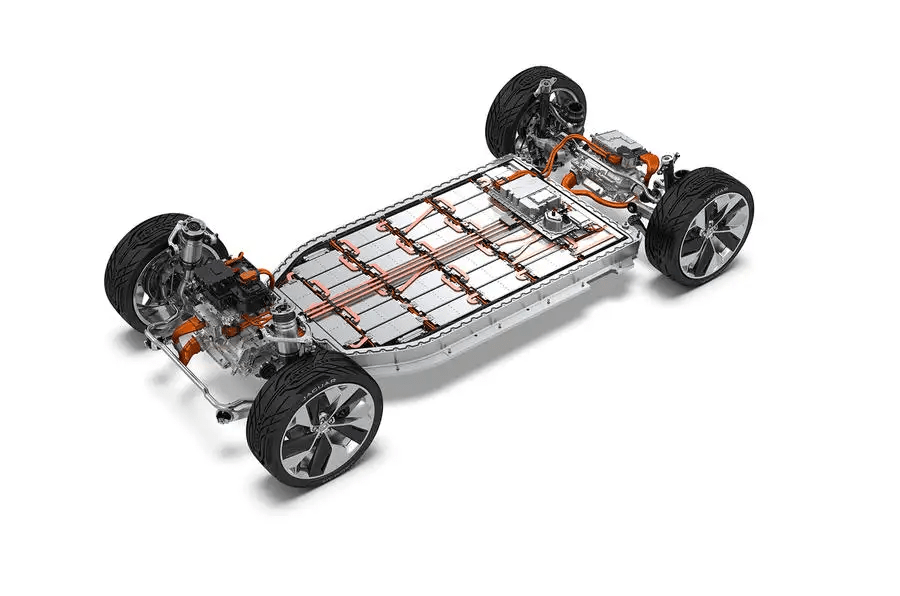
Typical with most other BEV, the battery sits under the floor and helps to achieve 50:50 weight distribution and a low center of gravity.
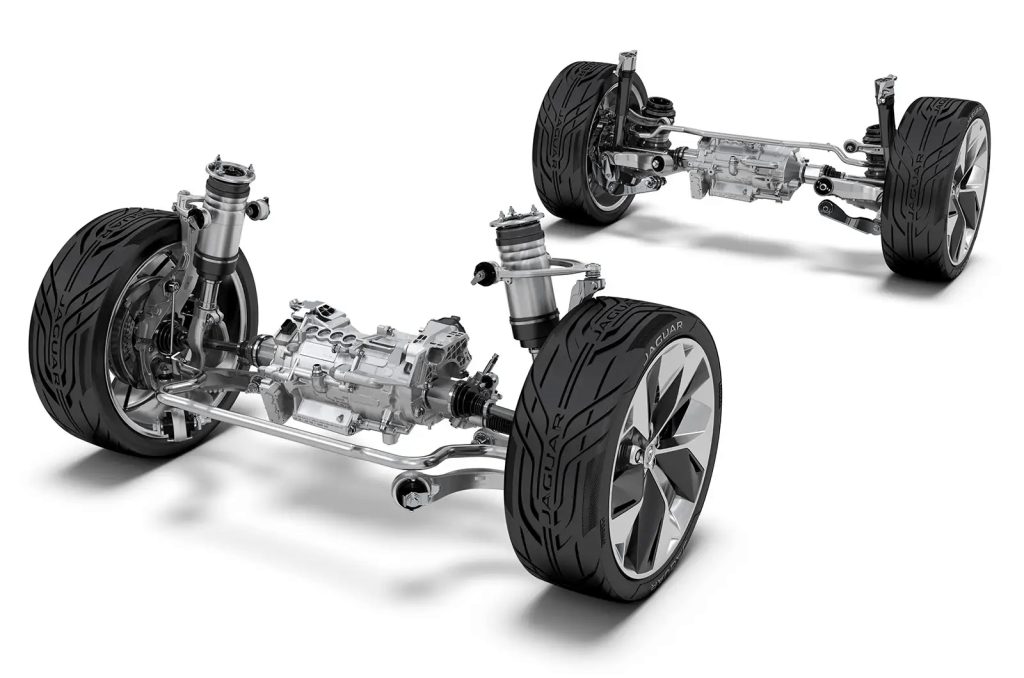
Double wishbone front and Integral Link rear axles with (optional) air suspension and configurable Adaptive Dynamics helps to achieve a good balance between agile handling and exceptional ride comfort.
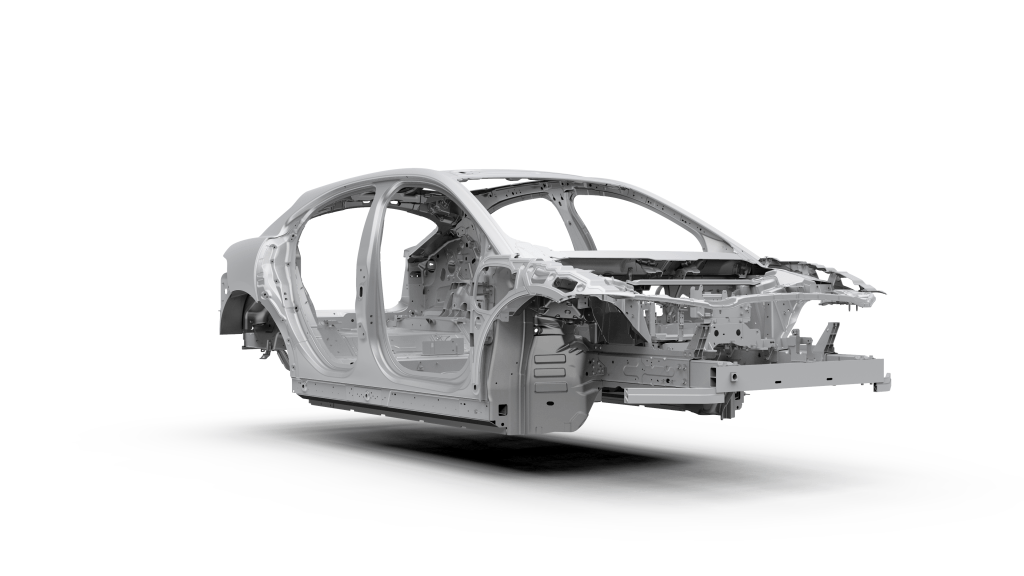
The I-PACE’s EV aluminum architecture combines advanced riveting and bonding technology, providing the highest torsional rigidity of any Jaguar, along with the structural battery pack, at 36kNm/°.
The regenerative braking can produce as much as 0.4G of braking force in high regen mode and offers single pedal driving mode.
This car comes with a Jaguar’s Touch Pro Duo infotainment system and features the standard 10″ and optional 5.5″ dual high-definition Touchscreens.
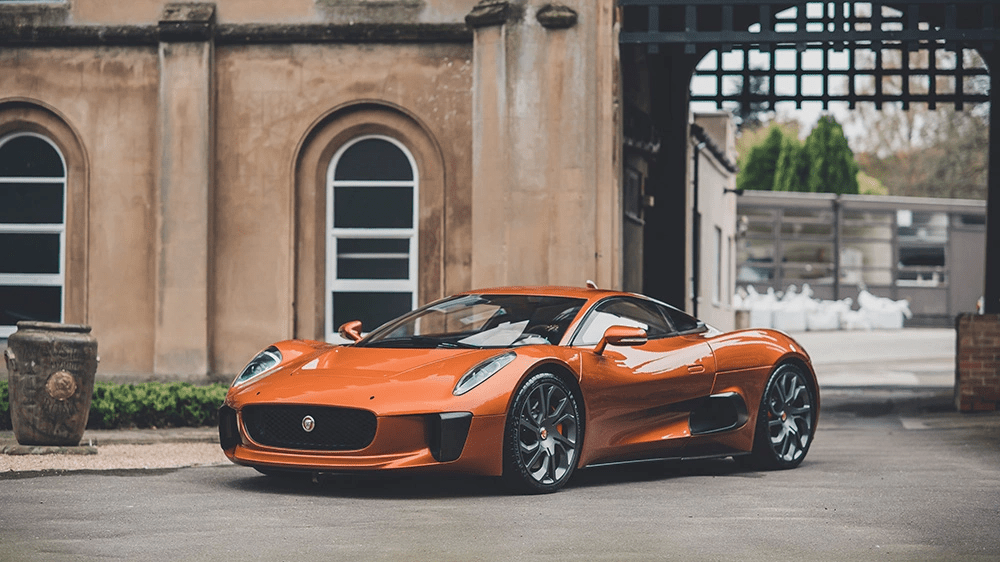
The I-PACE’s design is inspired by the Jaguar C-X75 supercar, featuring a sleek, coupe-like silhouette, a short, low bonnet, an aero-enhanced roof design, and a curved rear screen.
Despite being a mid-sized SUV, the I-PACE offers interior space comparable to large SUVs, with 890mm of legroom in the back, a useful 10.5-litre central storage compartment, and tablet and laptop storage beneath the rear seats. The rear luggage compartment has a capacity of 656 liters, which expands to 1,453 liters with the seats folded flat.
At launch, the I-Pace received positive reviews for its design, performance, and driving dynamics and according to JLR Malaysia it has since bagged over 80 awards, including the 2019 World Car of the Year, the 2019 European Car of the Year, and the 2019 German Car of the Year, World Car Design of the Year, and World Green Car.
Despite the impressive collection of silverware, the I-Pace only managed middling sales performing reasonably well in some markets but struggling in others.
In Europe, the I-PACE was the best-selling electric vehicle in its segment in 2020, with over 15,000 units sold. However, in the US, the vehicle has sold poorly, with only around 2,000 units sold in 2020.
Thanks to the current Malaysian government initiatives to promote EV adoption, this electric SUV is being offered at an attractive price of between RM460K for the Black LE variant and RM498K for the range topping HSE.
It comes with a comprehensive warranty coverage period of 5 years or 150,000km, whichever comes first, and 3 years of roadside assistance. The launch also offers a free RM1,000 credit on their DC GoToU app for orders collected during the launch period until May 28, 2023.
Bookings can be made at Jaguar showrooms in Ara Damansara and Penang. Interested customers can register at https://www.jaguar.com.my/i-pace-viewing-registration-form.
Below is some comparisons between the I-Pace and other electric SUVs available or soon to be available in Malaysia:
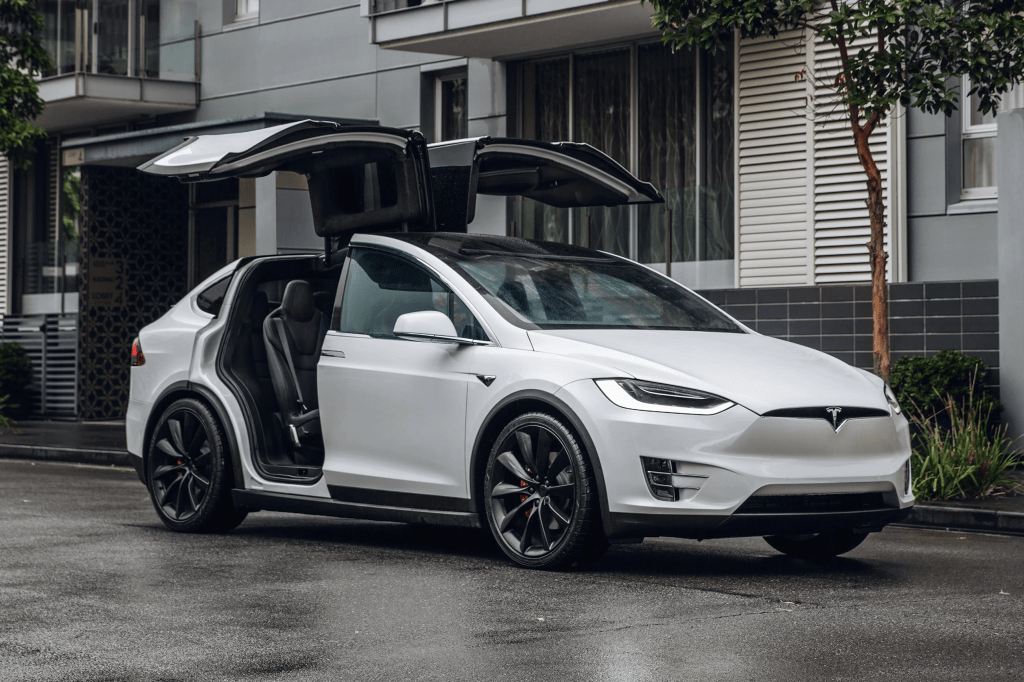
Firstly, compared to the Tesla Model X, the I-PACE has a slightly shorter range (470km vs 547km), but it has a faster acceleration from 0-100km/h (4.8 seconds vs 4.9 seconds) and a quicker charging time from 0% to 80% (40 minutes vs 50 minutes). The Model X is a larger SUV than the I-PACE, but the I-PACE has more cargo space (656 litres vs 542 litres with all seats up).
The Rivian R1S is another electric SUV competitor to the I-PACE. The R1S has a longer range than the I-PACE (660km), but it has a slightly slower acceleration from 0-100km/h (4.9 seconds vs 3 seconds for the R1S). The R1S also has more cargo space than the I-PACE (826 litres vs 656 litres with all seats up).
The Hyundai Kona and Ioniq 5 are smaller SUVs compared to the I-PACE, and both have a shorter range than the I-PACE (415km and 480km, respectively). However, both the Kona and Ioniq 5 have a lower starting price than the I-PACE, making them more accessible to a wider range of consumers.
The BYD Atto 3 is an electric city car that is smaller than the I-PACE and has a shorter range (311km), but it is designed for city driving and has a lower starting price.
The KIA EV6 is a mid-size electric SUV that has a longer range than the I-PACE (510km), but it has a slower acceleration from 0-100km/h (5.2 seconds vs 4.8 seconds for the I-PACE).
The Nissan Ariya is another mid-size electric SUV that has a similar range to the I-PACE (up to 482km), but it has a slower acceleration from 0-100km/h (5.1 seconds vs 4.8 seconds for the I-PACE). However, the Ariya has a lower starting price than the I-PACE.
Finally, the Toyota BZ4X is another upcoming electric SUV that is set to launch in 2022. It has a similar range to the I-PACE (up to 500km), but it has a slower acceleration from 0-100km/h (7.4 seconds vs 4.8 seconds for the I-PACE).
 Elektronikar