
California Governor and Tesla CEO reunite to announce engineering HQ move back to Silicon Valley
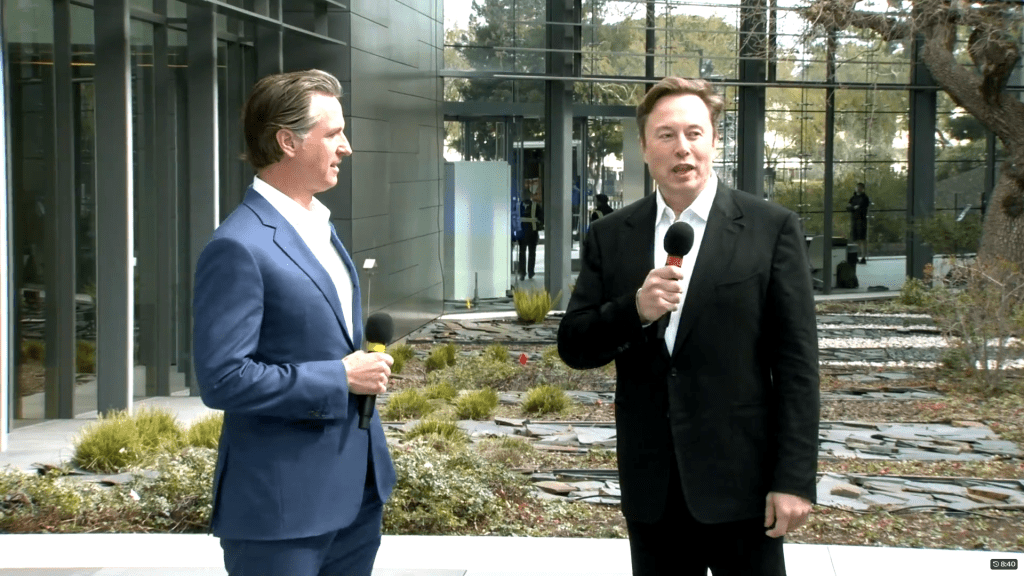
Electric vehicle (EV) maker Tesla is set to return to Silicon Valley, announcing it will locate its global engineering headquarters in Palo Alto, California.
The announcement follows Tesla’s move of its corporate headquarters to Austin, Texas, in 2020.
The move to Silicon Valley was confirmed by CEO Elon Musk and California Governor Gavin Newsom during a live-streamed event. The announcement comes more than a year after the EV maker relocated from Palo Alto to Austin.
While the joint announcement was light on specifics and Tesla has not explicitly stated that the move back to Palo Alto is due to the availability of top software talent in the area.
California has long been a hub for technology talent, and it is likely that Tesla’s decision to return to Palo Alto is, in part, driven by a desire to tap into that talent pool.
California is home to many of the world’s largest tech companies, including Apple, Google, and Facebook, and the state has a reputation for being at the forefront of technological innovation.
Furthermore, many top universities in the state, including Stanford and UC Berkeley, have strong engineering programs that have produced some of the world’s top technology talent.
Given Tesla’s focus on electric vehicles and other advanced technologies, it is not surprising that the company would want to be located in a place where it can easily recruit the best and brightest in the field.
Overall, while there may be other factors that influenced Tesla’s decision to return to Palo Alto, the availability of top software talent in the area is likely to have played a significant role.
The move also marks a possible end to strained relations between the company and California.
Tesla’s announcement of its return to Silicon Valley, specifically to Palo Alto, where it will house its global engineering headquarters, is notable given the company’s sometimes difficult relationship with the California state government. In 2020, Tesla CEO Elon Musk criticized California’s “overregulation, overlitigation, overtaxation,” and even moved his own residency to Austin, Texas, which does not have state income tax. The state government and Tesla also clashed during the pandemic, with Tesla defying local health orders and reopening its Fremont factory in May 2020, leading to a public feud with the county’s public health officer.
Tesla’s decision to return to Palo Alto and establish its global engineering headquarters in the former Hewlett Packard building suggests that relations between the company and California may be improving. The move also highlights California’s continued importance as a hub for innovation and tech talent, with Tesla and other companies continuing to look to the state as a key source of talent for research, development, and production.
Tesla, which has 47,000 employees in the Golden State, including a large footprint across Fremont, Lathrop and San Diego, plans to release further details about the move and other topics at its Investor Day event on 1 March.
In summary these may be key reasons for Tesla’s move back to Palo Alto:
- Strategic Location: Tesla’s new engineering headquarters is located in the heart of Silicon Valley, which is home to many technology companies and startups. By moving back to this area, Tesla will be better positioned to collaborate and partner with other businesses and innovators in the region. The company may also be hoping to tap into the vast talent pool of engineers, computer scientists, and other tech professionals in the area, which could help to accelerate its research and development efforts.
- Tax Incentives: California is known for offering generous tax incentives to companies that establish a strong presence in the state. It’s possible that Tesla may have received incentives or tax breaks from the California government in exchange for relocating its engineering headquarters back to Palo Alto. These incentives could have been a major factor in the decision to return to the area.
- Diversification: By maintaining a presence in both Austin and Palo Alto, Tesla may be looking to diversify its operations and reduce its dependence on any one location. This could help the company to mitigate risks related to factors like natural disasters, power outages, or other unforeseen events that could disrupt its operations in a single location.
- Positive Momentum: Tesla has had a lot of positive momentum in recent years, with soaring stock prices, robust sales, and a growing global footprint. The move back to Palo Alto could be seen as a sign that the company is continuing to thrive and expand, and that it is committed to innovation and growth in the years ahead.
 Elektronikar