
- The recent news that Tesla outsold the famously popular Toyota Camry in Australia signals a major shift in the auto industry. Not only is it the first time in 28 years that Toyota has not been top in their category, but it also marks an increase in the acceptance of electric vehicles in the marketplace.
- This shift towards electric is supported by government initiatives such as the Autonomous and Electric Vehicle Plan, which provides funding for research, development, and infrastructure to make electric vehicles more accessible.
- With more automakers offering electric vehicles and affordable options, it is likely that the trend of increasing electric vehicle sales in Australia will continue for the foreseeable future.

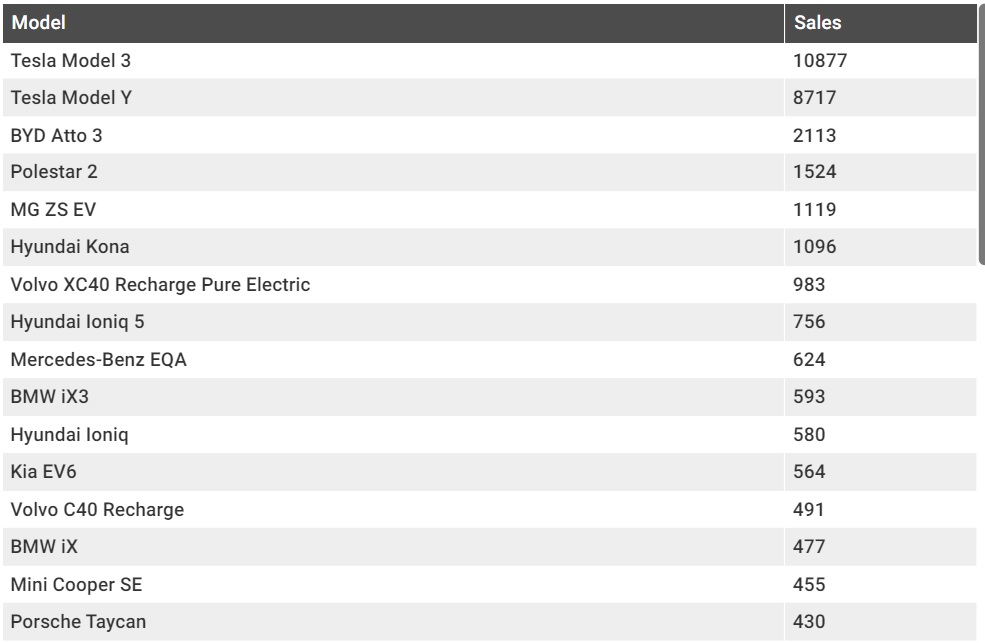
Tesla’s Model 3 has shocked the industry by outselling the Toyota Camry for the first time in 28 years, managing to edge the Toyota stalwart in December to end the year with a total of 10,877 Model 3s sold.
The fact that this happened in a year when Toyota Australia recorded its best sales in 14 years, absolutely dominating the charts, was a major upset for the market-leading Toyota, which had to amend its initial press release claiming that the Camry was the top-selling medium car for the 29th consecutive year.
The Camry nameplate had been a popular fleet and government choice since it first went on sale in Australia in 1983, and had held the mid-size passenger car sales supremacy for decades.

The decline in popularity is partly due to the major shift in the car market to SUVs, with many Camry competitors disappearing and sales of others diving, as well as the reinvigoration of the sedan segment by Tesla’s Model 3, prompting rivals to create EV alternatives.
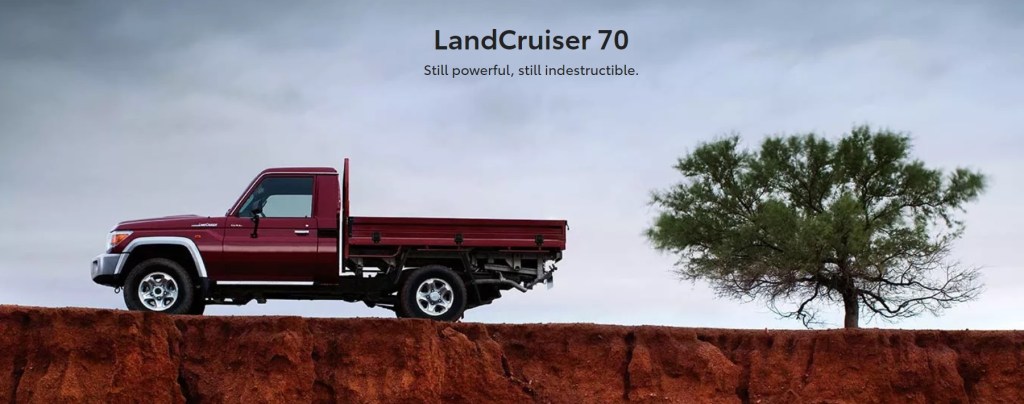
This does not mean that Toyota, which has been on top of the Australian sales charts for 20 years, is likely to lose its crown anytime soon, since demand levels for their other products such as the Land Cruiser and Hilux are at an all-time high.
Toyota was the best-selling model in nine market segments, with Corolla (small cars), Camry (medium cars), RAV4 (medium SUVs), Prado (large SUVs), LandCruiser wagon (upper large SUVs), HiAce (light buses and vans), and HiLux (4×2 and 4×4 utes) all topping their respective categories.
HiLux has now been the top-selling vehicle for seven years in a row, with a total of 64,391 delivered last year. This figure is the highest annual total for any vehicle in Australia since 2005.
It was also the 10th consecutive year the Corolla has been the top-selling passenger car, and the 29th consecutive year the Camry has been on top of the medium car segment.
Toyota was the top-selling company in 2022 with 231,050 vehicles sold, far ahead of Mazda on 95,718, Kia on 78,330 and Mitsubishi on 76,991.
The arrival of Tesla and growth in sales of other electric vehicles nearly doubled in 2022 compared to the year prior, with 33,410 electric vehicles sold accounting for 3.1% of all new motor vehicles.
Around three in five electric cars sold last year were Tesla badges, amounting to 19,594 vehicles. The best-selling non-Tesla electric vehicle in 2021, China’s MG ZS EV small SUV, was dethroned last year by another newcomer from China, the BYD Atto 3 small SUV.
BYD reported 2113 Atto 3 electric SUVs as sold in 2022, despite deliveries only commencing in September and a three-week pause on deliveries in October and November to resolve two breaches of Australian motor vehicle regulations.
In December 2022 alone, BYD’s Australian distributor EVDirect reported 1268 vehicles as sold, placing it second overall for the month, ahead of the Tesla Model Y (460) and behind the Tesla Model 3 (1806).
Between the third-placed BYD Atto 3 and fifth-placed MG ZS EV was the Polestar 2 on 1524 sales, the first model in Australia from the Chinese electric offshoot of Volvo.
The Hyundai Kona Electric finished sixth for the year with 1096 deliveries, combining with 580 Ioniq Electric hatchbacks and 756 Ioniq 5 SUVs to make Hyundai the second biggest seller of electric cars in Australia last year, with 2432 examples reported as sold.
Polestar edged sister company Volvo, which reported a record 1,474 electric vehicles sold in 2022, comprising 983 XC40 Recharge Pure Electric models and 491 of its coupe-styled, electric-only C40 twins.
13.8% of Volvos sold in Australia in 2022 were electric – exceeding the 10.9% share of Volvo electric cars sold globally last year, a key milestone in the company’s plan to go electric-only from 2026, four years ahead of Europe.
Large shipments of cars late in the year meant Volvo Australia reported 327 XC40s and 196 C40s sold in December – or 55% of the 959 vehicles it delivered in the month.

Among luxury manufacturers – excluding Tesla – Polestar and Volvo led the way, ahead of BMW (1,290), Mercedes-Benz (1,166), Mini (455), Porsche (430), Genesis (174), Audi (142), and Jaguar (23). Finishing at the bottom of the leaderboard was the LDV eDeliver 9 van (5), BMW i3 hatch (3), LDV eT60 ute, LDV Mifa 9 people mover, and Mercedes-Benz eVito van (2 each), plus the Ford e-Transit, Cupra Born, and Mercedes-Benz eVito Tourer (1 each).
However, these cars are ‘niche’ low-volume models that only went on sale in the last few months of 2022 (e.g. the Mercedes-Benz and LDV models), were discontinued early in the year (e.g. the BMW i3), or in the Cupra and Ford’s case, are internal company demonstrators and training vehicles that have been imported ahead of customer cars later this year.
The latest VFACTS figures indicate that the rise of electric vehicles (EVs) in Australia is evident and that this shift is only likely to continue in the coming years ahead. This is due to more automakers offering electric vehicles and an increased acceptance of EVs among drivers.
The government has been looking at various incentives, such as tax rebates, to boost the sales of electric vehicles in Australia. In addition, the Autonomous and Electric Vehicle Plan has been launched, which will provide $74million in grants to support research and development of autonomous and electric vehicles.

This plan will also help to establish infrastructure like charging stations, which will make it easier for drivers to purchase and use electric vehicles in Australia.
The auto industry’s focus on electric vehicles is becoming increasingly clear, and the success of Tesla’s Model 3 has paved the way for greater acceptance and accessibility of electric vehicles in Australia. The government’s support of electric vehicles through initiatives such as the Autonomous and Electric Vehicle Plan will further contribute to the increased availability and desirability of these cars in the coming years. Whether it be through private ownership or public transportation, the electric car movement is set to revolutionize how Australians think about getting around.
 Elektronikar