
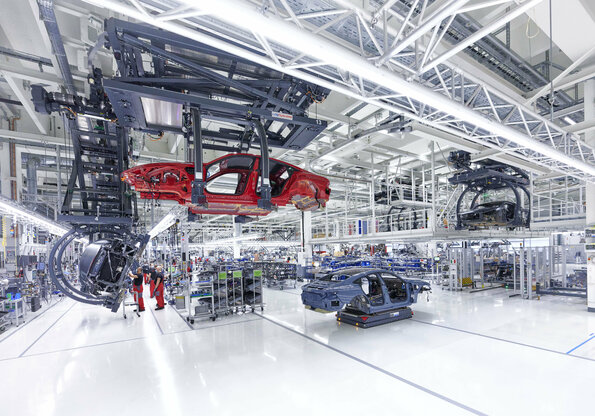
- A comprehensive approach, the 360factory: All production sites will manufacture all-electric vehicles by 2029
- The premium brand plans to halve its factory costs by 2033
- Board Member for Production and Logistics Gerd Walker: “The path Audi is taking conserves resources and accelerates our transformation to a provider of sustainable premium mobility”
Audi has announced that it will only launch all-electric models on the global market from 2026 as part of its Vorsprung 2030 corporate strategy. The company will gradually phase out the production of combustion models by 2033.
To achieve this goal, Audi is investing in its existing plants to make them just as efficient and flexible as newly built production sites or greenfield plants.
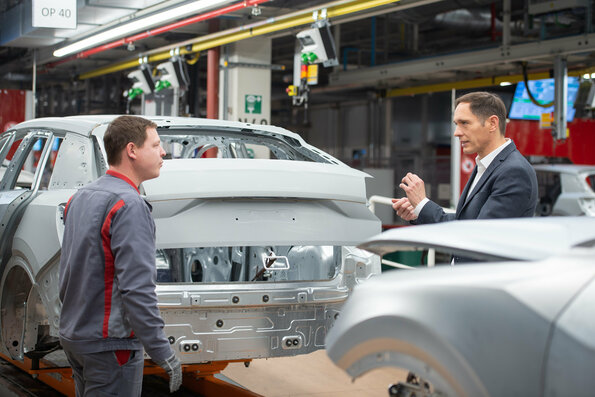
“We are bringing all our sites into the future. The path Audi is taking conserves resources and accelerates our transformation to a provider of sustainable premium mobility,” says Gerd Walker, Audi Board Member for Production and Logistics.
To prepare for the transition to electric mobility, Audi has developed its 360factory, which aims to balance cost-effectiveness, sustainability, flexibility, and attractiveness.
By the end of the decade, all of Audi’s production sites worldwide will be making electric-drive models. Two sites, Böllinger Höfe and Brussels, are already producing all-electric vehicles, and production of all-electric cars will gradually start in Ingolstadt, Neckarsulm, San José Chiapa, and Győr.
In 2029, all production sites will be producing at least one all-electric vehicle model. Depending on local conditions, the remaining combustion models will be phased out by the beginning of the next decade.
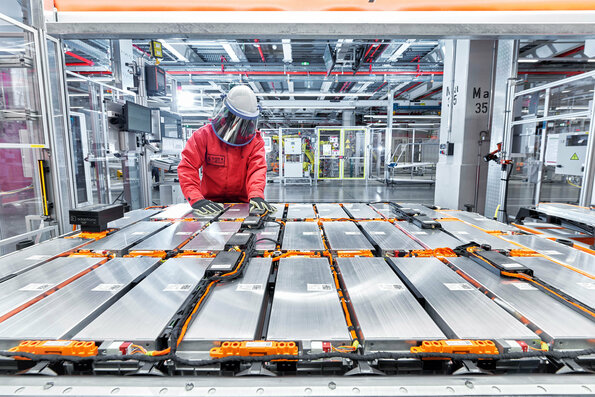
New plants will only be built where additional capacity is needed. For example, Audi and its partner FAW are currently building a site in Changchun, China, where models based on the PPE (Premium Platform Electric) technology platform will be locally produced. This will be the first automotive plant in China where only all-electric Audi models will be produced.
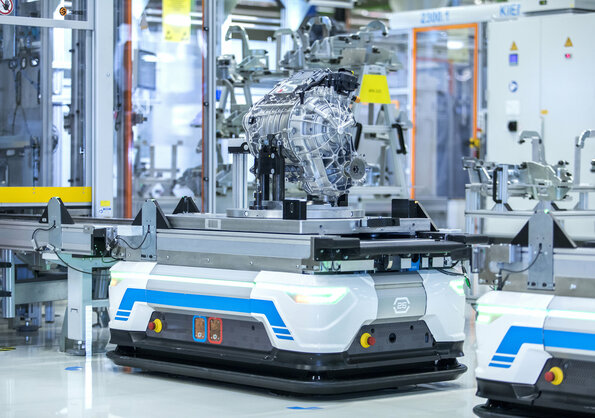
In addition to electrifying its plants, Audi plans to increase productivity and optimization through the modification of its production processes. The company aims to cut annual factory costs in half by 2033 by reducing the complexity of its vehicles and continuing to digitalize production. The Edge Cloud 4 Production solution, for example, will be used to analyze and optimize production data in real-time. Audi also plans to increase the degree of automation in its plants and to use robots and cobots to handle tasks that are not suitable for humans.
Audi’s transition to electric mobility will also involve the development of new business models. The Audi Shared Fleet, for example, is a flexible car-sharing service that allows customers to use different models of Audi electric vehicles for short periods of time. The service is currently being tested in Germany and will be rolled out to other markets in the future.
In conclusion, Audi is committed to the production of all-electric vehicles as part of its vision for the future. The company is building on its existing global production network and developing new business models to ensure that its production is economical, sustainable, attractive, and flexible. With a training budget of around 500 million euros, Audi will make all its employees fit for the future by 2025 and will gradually phase out the production of combustion models by 2033.
 Elektronikar