

2022 was mixed bag for most automakers in the sense that while demand rebounded, in some markets quite strongly, supply and logistics challenges meant many were not able to capitalise on the robust market with higher sales volume.
The BMW Group sold around 100,000 fewer cars in 2022 at 2.4 million vehicles but thanks to their premium positioning, Munich was able to improve on their bottom line by increasing prices throughout the year.
More interestingly 2022 saw companies that offered electric vehicles record significantly stronger demand for EV compared to ICE, for example BMW more than doubled the proportion of fully-electric cars sold to reach almost 10% of total sales.
That in itself is impressive and encouraging for the EV market but that is not the whole story, the actual number of bookings for some models are downright terrifying.

For example, Malaysian bookings for the new i7 electric flagship limousine is well past 3,000 units and are now in danger of breaching the 4,000 units. That is typically their entire year’s sale of 7-series.
I will be the first to admit that the luxury segment will likely convert to EV a lot faster than the rest of the industry because the benefits of quietness and lack of vibration in an electric car simply cannot be matched by any ICE powerplant.

That said I believe that all the premium German brands will find demand for EVs outstripping supply in 2023 as more people are coming round to the idea of owning an EV, if not out of concern for the environment, then certainly out of concern for their pockets, thanks to global geopolitical uncertainty and yo-yoing fuel prices and availability.
We do not know how many orders are still on BMW’s global order list for their electric vehicles but they are targeting 15% battery-electric sales this year.

This represents a 50 per cent increase in EV sales but when we consider BYD more than tripling their EV sales this year and how Tesla, with only two mass market models and very little history were able to increase their market share by 40%, maybe the planners at BMW is being overly conservative.
Conservative or are they just planning according to their supply chain restrictions? I am leaning towards the latter because many traditional brands were still in early transition mindset when they began their EV programs a few years ago and planned for modest volume targets over the course of the model lifetime of their first-generation EV.
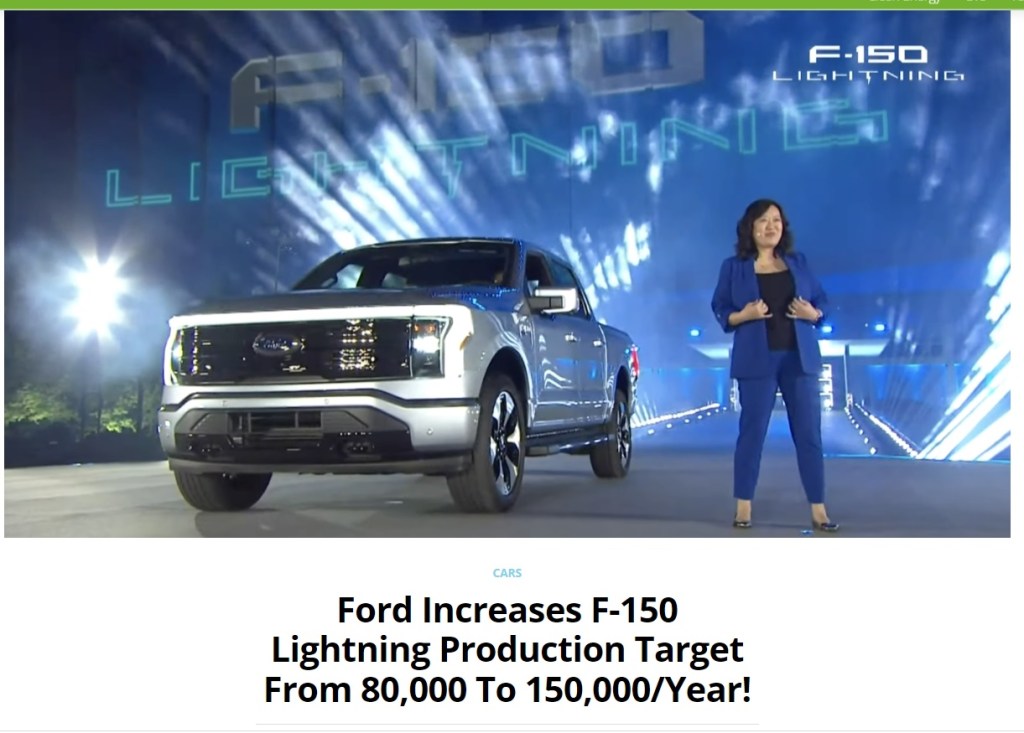
One of the clearest examples is Ford which initially aimed to sell around 40,000 F-150 lightning a year for the five years they planned and within months, the order books began bursting to hundreds of thousands of bookings.
They have had to double and double again their target and now Uncle Henry is still working hard to increase their capacity and, in the end, admitted that they simply would not be able to fulfil the orders and promised to simply fulfil it with the next generation of vehicles.
Talk about wasted opportunity.
The core BMW brand sold 2.1 million vehicles last year, down from a record 2.2 million in 2021, as Covid-19 lockdowns in China stymied supply and European inflation weighed on demand and yet EV sales doubled.
If we look at all the trend curves, once a particular technology hits the inflection curve, the rate of adoption will be exponential until it tapers at around 80% and 2022 has taken the global automotive market to the inflection point with around 14% of all car sales being battery electric, China alone buying up just over 5.3 million.
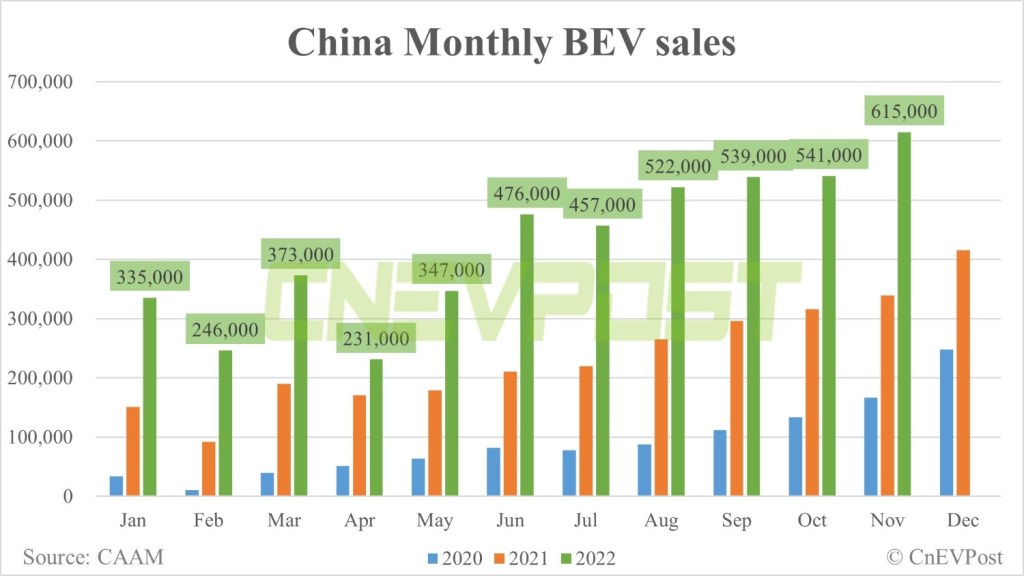
From this it would only be sensible to assume that the rate of take-up for EVs will continue to rise and the minimum rate of growth would be 50% annually from now on and may well double every year until it plateaus.
If the rate of EV growth continues apace, many carmakers will find themselves unprepared in markets such as China, Europe and the United States.

The situation may not be so dicey for traditional automakers if Chinese brand are not so well prepared and can draw on huge excess capacity to soak up the global market.
Apart from production capacity, Chinese EV brands have been exploring affordable models for years and is quite ready to offer them to the world.
Governments will always try to protect their industry but it would be an odd thing to protect the ICE industry because electric drive is not just a reality but a much better option.

So, expect most countries to build more EV capacity in the next few years and maybe set up temporary protection for the local players but the force of the current technology convergence may be too much for any Government to deal with.
Bear in mind that even the US government had to make a U-turn on their EV credit policy, designed to give local players a boost to help them build capacity because their trading partners like Europe, South Korea and Japan protested.
As for BMW, they will sail past the 50% EV growth, probably within the first half of 2023 and if they are unable to get their supply chain going, the rest of the order potentials will be a lot opportunity.
I expect more changes of direction from Munich, Stuttgart, Wolfsburg, Ingolstadt, Seoul, Detroit, Tokyo, Yokohama and even New Delhi.
By the way, I think India might become an interesting dark horse in the next few years of the EV race. But that is for another day.
 Elektronikar